
Why Was Jesus Born in a Manger? The Meaning Explained
Of all the places the Son of God could have entered the world, he came to a feeding trough. Not a palace, not even a proper home — an animal's manger. It's such a familiar image that we can forget how strange and deliberate it is.
So why was Jesus born in a manger? The answer isn't only about a lack of lodging that night. The humble setting was a message in itself, revealing the kind of King and Savior Jesus came to be. As part of our bible verses for Christmas, the manger rewards a closer look.
Here is the immediate reason, the deeper meaning, and what the manger tells us about God.
The immediate reason
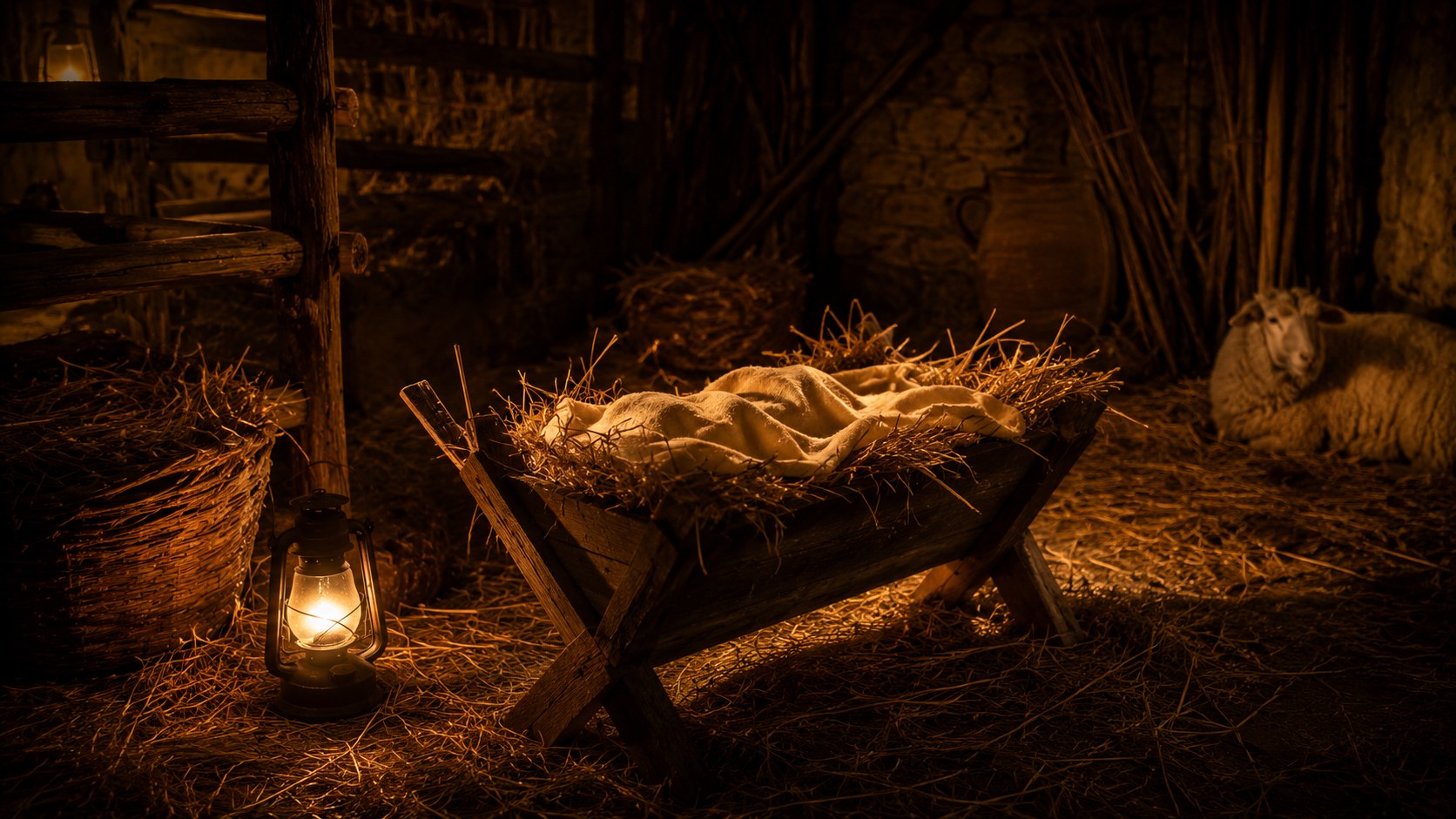
Luke gives the plain account: Mary "wrapped him in cloths and placed him in a manger, because there was no guest room available for them" (Luke 2:7). A manger is a trough that held feed for animals. With the guest quarters full, the family ended up where the animals were kept, and the newborn was laid in the only available cradle — a feeding trough.
So at one level, the manger was simply what was at hand. But Luke clearly wants us to notice it. He mentions the manger three times in the chapter, and it becomes the very sign the angels give the shepherds: "you will find a baby wrapped in cloths and lying in a manger" (Luke 2:12). The lowliness is the point.
The deeper meaning
The manger embodies the heart of the Christmas message: that God humbled himself beyond all expectation. The One who made the universe entered it in utter vulnerability and poverty. The apostle Paul later described this self-emptying — that Christ "made himself nothing by taking the very nature of a servant" (Philippians 2:7). The manger is that verse made visible.
It also tells us who Jesus came for. A Savior born in a palace would belong to the powerful. A Savior born in a manger belongs to everyone — especially the poor, the overlooked, and the ordinary. From his first breath, Jesus was identified with the lowly.
A note on the manger as a foreshadow
Early Christians noticed something poignant about that first detail. A manger is where food is placed — and Jesus would later call himself "the bread of life," and would give his own body, saying "this is my body, given for you." There's a quiet thread running from the feeding trough of his birth to the table of the Last Supper: the child laid where animals came to feed would grow up to become, in a deeper sense, food for the world — the source of life for all who come to him. Whether or not this connection was in Luke's mind, it captures the shape of the whole gospel. The humility of the manger was never the end of the story; it was the first step of a God who would give himself away entirely. The trough was a fitting beginning for a life poured out as nourishment for others.
What the manger tells us today
The manger is an enduring comfort. It means God is not too grand for the humble places of your life. He began in poverty and obscurity, so there is no situation too lowly for him to enter. Wherever you feel small, overlooked, or in want, the manger says: this is exactly the kind of place God chose to begin. He comes near to the low.
What the manger means: why Jesus was born in a manger
When you wonder why Jesus was born in a manger, remember the comfort in it: God is not too grand for the humble places of your life. He began in poverty and obscurity, so no situation is too lowly for him to enter.
Frequently asked questions
Why was Jesus born in a manger?
Immediately, because the guest quarters were full and the family stayed where animals were kept, so Jesus was laid in a feeding trough (Luke 2:7). More deeply, the humble setting reveals a Savior who came in lowliness, near to the poor and ordinary.
What is a manger?
A manger is a trough that holds feed for animals. With no proper cradle available, it became the first bed of Jesus — a detail Luke emphasizes three times and which the angels give as the sign to the shepherds.
What does the manger symbolize?
It symbolizes God's radical humility — the Creator entering the world in vulnerability and poverty (Philippians 2:7). It also shows Jesus came for everyone, especially the lowly, since he was identified with the humble from birth.
Is there deeper meaning in the feeding trough?
Many see a foreshadow: a manger holds food, and Jesus would call himself "the bread of life" and give his body for the world. The place of his birth quietly anticipates a life given as nourishment for others.
Written by Hannaniah, an ordained minister and seminary professor based in California. For more, see Luke 2 on Bible Gateway or Bible Hub.