
Well Done, Good and Faithful Servant: Meaning
They may be the seven words every believer most longs to hear one day. But notice what Jesus does not say. He doesn't say "well done, successful servant," or "impressive," or "important." He says faithful.
The well done good and faithful servant meaning turns on that single word, and it quietly redefines what a life well-lived looks like in God's eyes. Understanding the parable it comes from changes who gets to hope for those words. It's one of our famous bible verses explained.

Here is the parable behind the phrase, what it actually rewards, and why "faithful" is such good news.
The parable behind the words
The phrase comes from Jesus' Parable of the Talents (Matthew 25). A master entrusts three servants with differing amounts of money before going on a journey. Two invest what they're given and double it; one buries his out of fear. To each of the two who used what they had, the master says the same thing: "Well done, good and faithful servant! ... Come and share your master's happiness!" (Matthew 25:21).
The detail that matters: the two faithful servants were given different amounts and produced different totals — yet both received the identical commendation. The reward wasn't tied to how much they ended up with, but to their faithfulness with what they'd been given.
Faithful, not successful
This is the heart of the verse. God's "well done" is not awarded for being the most gifted, the most visible, or the most accomplished. It's awarded for faithfulness — for stewarding well whatever he has actually entrusted to you, large or small.
That's liberating. You are not measured against someone with more talent, a bigger platform, or louder results. You're measured by what you did with your portion. The servant with two units who made two more got the same "well done" as the one with five who made five. Faithfulness, not output, is the currency of God's approval.
A note on the one who buried it
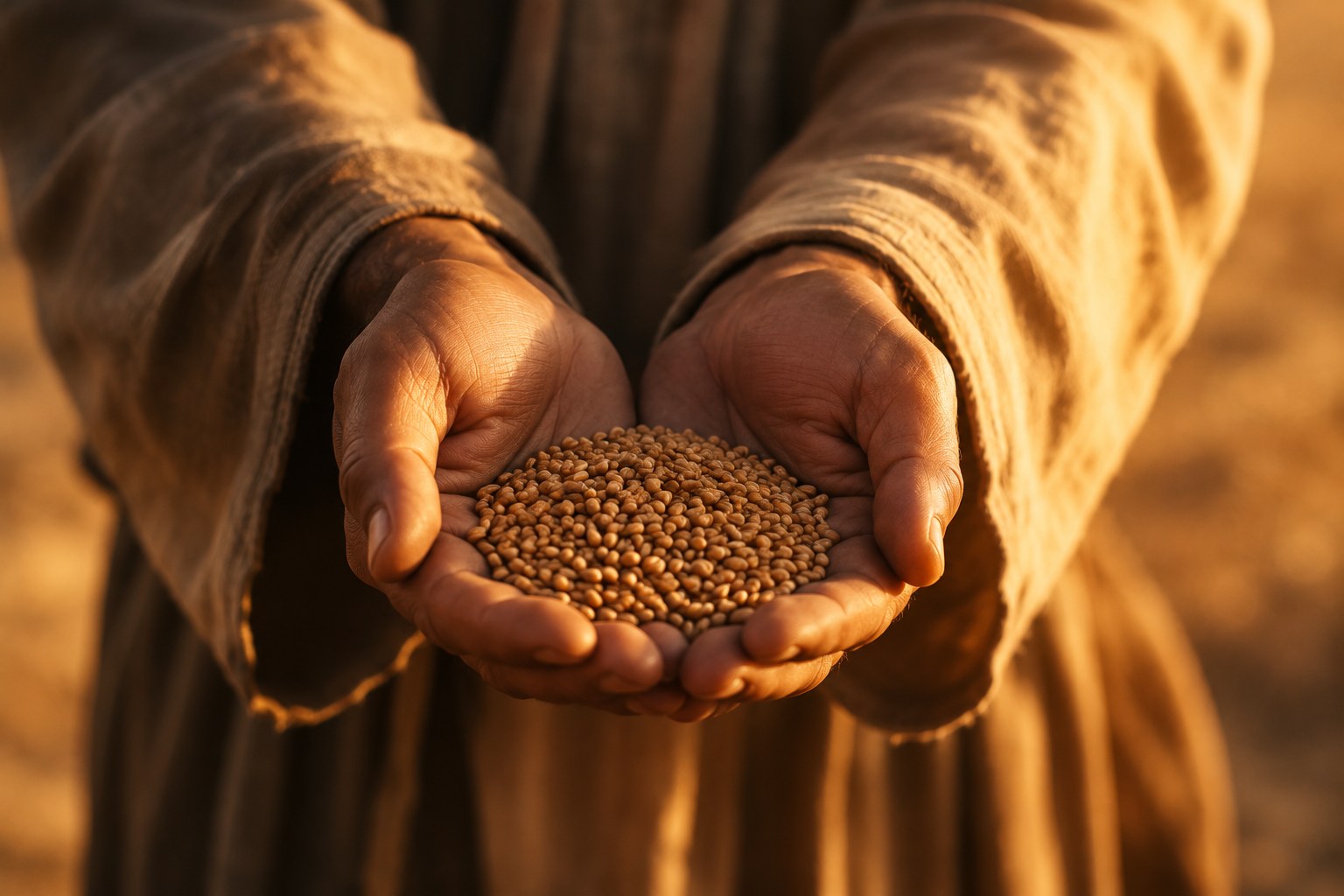
The contrast in the parable is instructive. The servant who was condemned didn't squander the money on wild living or steal it — he simply buried it out of fear and did nothing. That's a sobering detail: the failure Jesus highlights isn't dramatic wrongdoing but fearful inaction. The servant misjudged the master as harsh and let that fear paralyze him. So the parable warns against a very ordinary danger — playing it safe, hiding what we've been given, doing nothing with our portion because we're afraid. Faithfulness, it turns out, requires a certain courage: the willingness to risk using what God has entrusted rather than protecting it by burying it.
How to live toward "well done"
The practical question this verse poses is simple but searching: what has God actually entrusted to you — what gifts, relationships, resources, time, opportunities — and are you using them or burying them? You don't have to do what someone else was given to do. You have to be faithful with your own portion. That is the path to the words every believer hopes to hear.
Living toward the well done good and faithful servant meaning
Ask what God has actually entrusted to you, and use it rather than bury it. The well done good and faithful servant meaning is that faithfulness with your own portion, not the size of your results, is what God commends.
Frequently asked questions
What does "well done, good and faithful servant" mean?
From Jesus' Parable of the Talents (Matthew 25:21), it is the master's commendation for servants who faithfully used what they were entrusted with. The reward is for faithfulness with one's portion, not for how impressive the results were.
Why does Jesus say "faithful" and not "successful"?
Because God measures stewardship of what he's actually given us, not output or size. Two servants given different amounts received the identical "well done," showing the reward is tied to faithfulness, not totals.
What was wrong with the third servant?
He buried what he was given out of fear and did nothing with it. The failure wasn't dramatic wrongdoing but fearful inaction — playing it safe instead of faithfully using his portion.
How can I live toward hearing "well done"?
Identify what God has entrusted to you — gifts, relationships, time, opportunities — and steward it faithfully rather than burying it out of fear. Faithfulness with your own portion, not comparison to others, is the path.
Written by Hannaniah, an ordained minister and seminary professor based in California. For more, see Matthew 25 on Bible Gateway or Bible Hub.