Faith Is Refusing to Panic — Vaneetha Risner
We all know what panic feels like. It springs up when we sense something catastrophic is coming. Our hearts pound, our minds race, adrenaline floods our bodies. We brace to fight or run, or we freeze in fear. In those moments we rarely think about God, because panic is natural and trust is not.
Martyn Lloyd-Jones said in his book Spiritual Depression, "Faith is the refusal to panic, come what may." I love that definition because it orients my mind on what is true when everything around me is swirling. Faith is believing that God is who he says he is and will do what he says he will do, even when every instinct in me wants to wrestle for control and brace for impact.
Israel's Panic in the Wilderness
We see this contrast between faith and panic all over the Bible. Think of the Israelites in the wilderness. They watched the ten plagues of Egypt unfold. They walked through the Red Sea on dry ground while the waters stood like walls on either side. They saw the pillar of cloud by day and the fire by night, so they knew the Lord was with them. And yet at the first sign of trouble, they panicked.
They complained about food. They grumbled about water. They accused Moses, and by extension, God, of leading them out of Egypt not to freedom, but to die in the desert. When they finally stood at the edge of the Promised Land and saw the giants, they fell apart completely crying out: “Why has the Lord brought us to this land to fall by the sword? Our wives and children will become plunder!” (Numbers 14:3). They talked about going back to slavery, because at least in Egypt they knew what to expect.
Their fear is understandable. What is striking is how quickly they forgot what they knew about God. They interpreted their circumstances apart from God’s character. And if we’re honest, we do that too.
The Disciples in the Storm
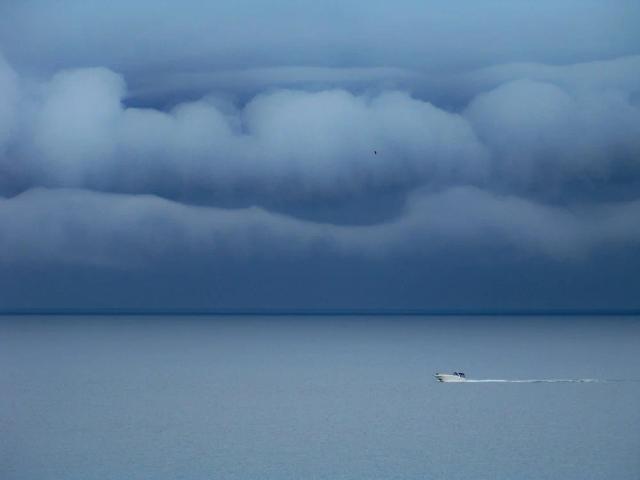
We see that same pattern in the New Testament, even among the disciples. When their boat began filling with water, Jesus was asleep in the stern. They woke him in a panic: "Teacher, don't you care if we drown?" (Mark 4:38). When they were in danger, they quickly doubted Jesus’s care. The crisis didn’t just shake their sense of safety; it made them question who Jesus was.
Then there is Peter, walking on the water toward Jesus until he noticed the wind and the waves. The moment his eyes shifted from Jesus to his circumstances, he sank. Again and again, Scripture connects faith to where we fix our eyes. Jesus caught him and said, "You of little faith, why did you doubt?" (Matthew 14:31). That question is for us too. Why do we doubt? Usually because we’re looking at the wrong thing.
When You Don't Know the Ending
So what is faith? Hebrews 11:1 tells us, "Faith is the assurance of things hoped for, the conviction of things not seen." It is not closing our eyes and pretending everything is fine. It is opening our eyes to who God is and refusing to panic. Or as Oswald Chambers put it, "Faith is deliberate confidence in the character of God."
Part of what makes panic so powerful is that we cannot see the ending. The first time we watch a movie, our stomach tightens when the hero hangs in the balance. The second time, we are calm, because we know how it ends. Faith lives in that first viewing while holding the confidence of the second. It asks, right in the middle of the devastation: Can I trust that God knows the ending, and that his ending will be good, even if I would not have chosen the path to get there?
It’s easy to trust God with everyday things, but much harder with the things that we fear most. What are those things for you? What keeps you up at night? Is it your declining health, or the health of someone you love? Is it job stability and the bills that never stop? Is it whether you’ll stay single when you long to be married, or whether your marriage will survive when it feels shaky? Is it fear that your children won’t come to faith, or that an estrangement will never heal? Is it worry that your best years are behind you, or that your mind is slowly slipping?
Whatever it is, panic whispers that God is not enough for this.
What God Has Actually Said
I don’t want to pretend that trusting God means we will be spared from our worst fears. Some prayers are not answered the way we want. We face stunning disappointments. Nightmares sometimes do come true. But God's promises never fail, and his faithfulness runs through every page of Scripture. He is for us. He is with us. He will never leave us. He is working all things for our good, and nothing can separate us from his everlasting love. He has prepared for us a future so good we cannot currently imagine it.
Do you believe that, or do you forget these truths the moment life gets hard? When pressure intensifies, do you give in to panic and live as if the God who made heaven and earth is no longer in control? To panic is to act as if he is not. Faith does not mean we never feel afraid. It means that when fear rises, we rehearse what is true about God instead of what our circumstances tell us.
No one has ever found God unfaithful. The sea can go no further than he commands. So even if the earth gives way and the mountains fall into the heart of the sea, we do not need to fear (Psalm 46:2). A loving God goes before us, walks beside us, and hems us in behind. He has already been to the future and is preparing us for it today.
That is what it means to say with Dr. Lloyd-Jones that faith is the refusal to panic, come what may. Faith is believing what God says more than what I can see. Faith is trusting God more than I trust myself.
So today, whatever you're facing, lift your eyes from the waves to the One who commands them.