Invented word: Pandemonium
By Elizabeth Prata
If you’ve ever been to a full-to-the brim animal shelter during puppy and kitten season, you know it can be a chaotic situation. After a winning football game with fans streaming onto the field, the first day of Pre-Kindergarten class, the courtroom when an unexpected verdict is announced…it’s pandemonium.
Merriam Webster defines the word pandemonium as: “a noun that refers to a wild uproar, tumultuous noise, or utter chaos and disorder. It typically describes a situation where people are confused, excited, angry, or frightened, resulting in loud, unmanageable bedlam.”
‘Unmanageable bedlam.’ I like that description.
Prior to 1667, the word pandemonium did not exist. John Milton invented it. He is the author of Paradise Lost, and his use of the word first occurs in Book 1 of the Epic Poem, line 756.
As with any Epic, the author begins the poem in the middle of the action, or in media res. Paradise Lost opens in the chronological middle of the plot, where Satan and his evil cohorts have been found to be sinners and tumbled from heaven into the deeps of hell. After recovering from the shock, Satan and his evil angels build a castle fortress in hell, and it is called “Pandemonium.”
Etymology Online describes the origin of the word:
“1667, Pandæmonium, in “Paradise Lost” the name of the palace built in the middle of Hell, “the high capital of Satan and all his peers,” and the abode of all the demons; coined by John Milton (1608-1674) from Greek-
–pan- “all”
-Late Latin daemonium “evil spirit,”
So…’pandemonium’ means ‘all demons’.
The meaning of the word by 1779 came to be understood as “place of uproar and disorder”. source.
In Rome, you might know of the building the Pantheon, you see the word ‘pan’ again. Pan means ‘all’ and theon meant gods. The word ‘panorama’ is pan meaning all and orama meaning ‘view’.
As I’ve mentioned before, words change. Our commonly understood vocabulary does not remain static, but changes over time. Old definitions drift away. New words come in. In fact, Shakespeare invented about 1700 words by changing nouns to adjectives and vice versa, combining words, and totally inventing new ones.
Words like accuse, courtship, blushing, dishearten, elbow…all from The Bard.
Pandemonium is such a good word to depict the author of Chaos’ evilly erected fortress out of the Lake of Fire. His Infernal Council as Milton terms it, when the unholy ones roused themselves after being cast out of heaven, the highest evil one situated atop his dastardly throne, debating war plans and strategizing from the fellow ‘gods’ such as Molech and Baal… contrasts with the peace of heaven’s throne, orderliness of God’s foreknowledge and perfectly unfolding plan for the universe, heaven, and humanity…
We know there are only two gates. There is pandemonium with the flesh of all pagans kicking against the goads… or peace with God and a stilled and forgiven soul for those who have repented to Jesus.
John Martin 1841, his interpretation of Pandemonium-
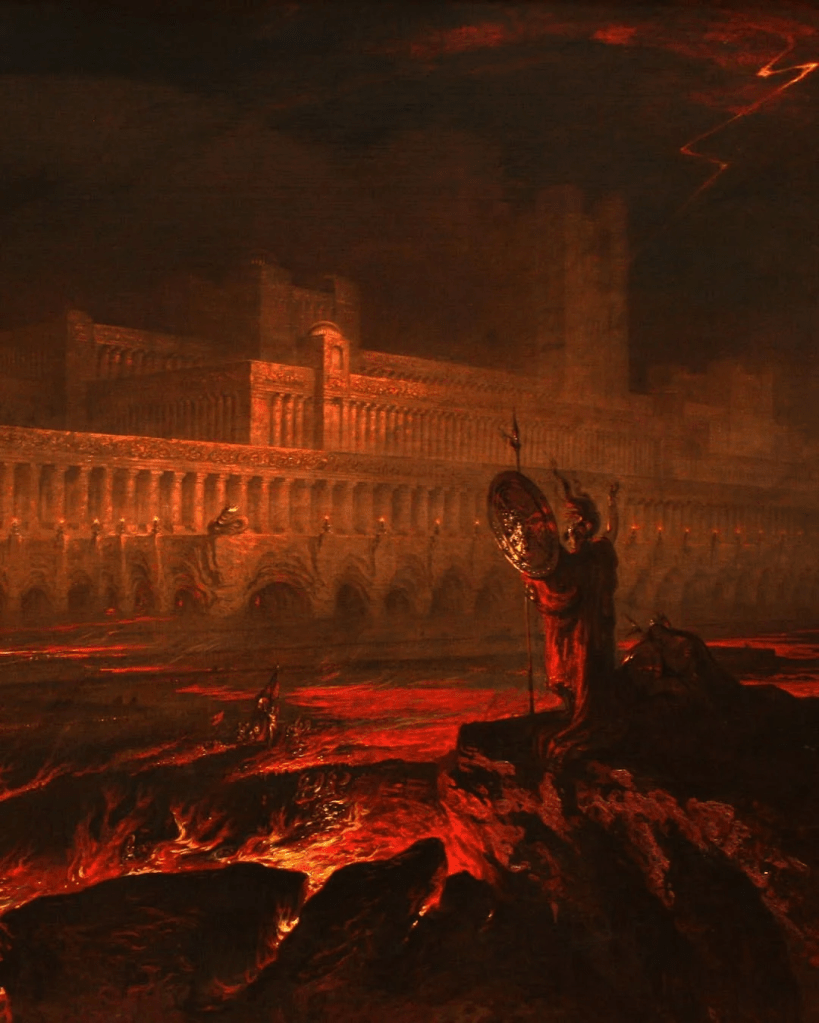
Above- “In Paradise Lost (Book I), Milton describes Pandemonium as a grand, opulent palace built by fallen angels under Satan’s command, rising from Hell’s fiery landscape with “stately height” and adorned like a temple. Martin captures this by portraying towering, temple-like structures with Babylonian and classical architectural influences, wreathed in flames and smoke. The painting’s monumental scale and intricate details show Milton’s vision of a city that rivals heavenly splendor, symbolizing the fallen angels’ pride and ambition.” Description source.
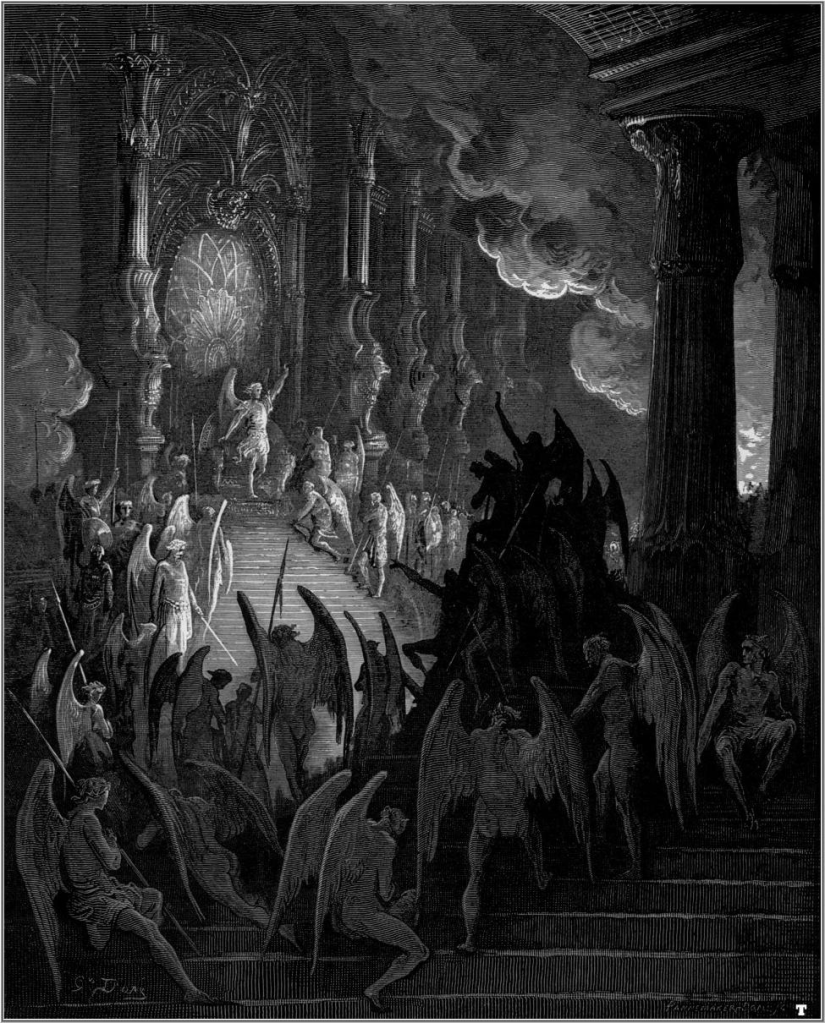
Below, Gustave Dore’s interpretation of Pandemonium and the engraving that is included in my edition: