The (in)justice of forgiveness
Jesus knows that asking us to forgive feels like asking us to place a crossbeam on our shoulders.
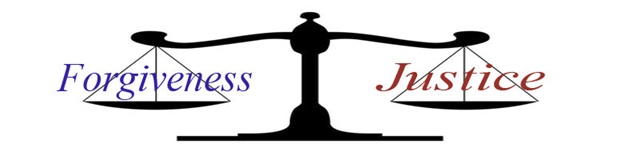
What sort of justice system asks us to forgive people who don’t deserve it? If you struggle to forgive, you’re not alone. It’s not a natural desire. Jesus went out on a limb with this one.
Scot McKnight’s classic The Jesus Creed (Paraclete Press, 2004) includes this observation:
Forgiveness doesn’t appear in any of Moses’ lists of commandments. In all the prayers of David, we don’t find the prayers concerned with forgiving one another. And, the prophets don’t call Israelites to forgive one another. …
Forgiveness is generally granted in the Old Testament on the condition of repentance. One doesn’t walk around Israel handing out pardons or amnesty certificates to sinners unless and until they repent. This requirement of repentance prior to forgiveness expresses an important system of justice in Israel. It is (at some level) simply unjust to forgive because it would be giving someone something they don’t deserve (pp. 218-219).
Nailed it! That’s why we find forgiveness hard. Jesus asked us to do something that offends our understanding of justice. Scot continues:
The Jewish scholar Solomon Schimmel has written the most complete study of forgiveness. While he respects the differences among Jewish thinkers on forgiveness, he represents a representative viewpoint of how Jews understood their tradition about forgiveness. And Schimmel observes a fundamental difference between Judaism and Christianity when it comes to forgiveness: Judaism overall is more concerned with guaranteeing justice than with forgiving incorrigible sinners, whereas Christianity, at least in its foundational prayer and creeds, if not in its actions, talks more of forgiveness as an act of grace, given even to the undeserving and not-yet-repentant, than of justice (p. 220).
That’s why forgiveness feels unjust by every measure of human justice. We’re asked to do something that reflects God’s nature rather than our own:
Forgiveness begins with God’s loving act of forgiving. It suspends any system of justice: Instead of sinful humans getting what they deserve (a system of justice), they are granted forgiveness (a system of forgiveness).
This loving act of forgiveness reveals God’s inner nature: he is a forgiving God. He preemptively strikes the human condition with an offer of grace. That strike of God’s forgiving love to us produces in us a cascading flow of forgiveness to others (p. 220).
That’s the difference between God’s justice and ours. We want retribution. God wants restoration. Waiting until people deserve forgiveness will never redeem the world.
So God calls us to a pre-emptive strike on evil: not repaying evil with evil, but with a love that makes peace with everyone as far as it depends on us. We do this not because we think it’s just, but because we trust divine justice to sort out injustice rather than feeling that we must give people what they deserve (Romans 12:17-21).
That’s the reason we struggle with forgiveness. We don’t trust God to give the offender what they deserve. We want to the offender to pay, at least as much as they hurt us, but we don’t believe God will make them pay. That’s the story of the cross. When the Sanhedrin handed the Messiah over to Pilate to be crucified, God did not take their lives. Instead, God gave life to his murdered Son, raising him up with all authority in heaven and on earth.
God’s good news (gospel) declares that evil has fallen and his Son is reigning. God’s good news calls all the peoples of the earth to trust his Son’s leadership. This is how God redeems the world: not retributive justice against the world, but restorative justice that brings us to life in him (John 3:16-17). That’s how God’s kingdom comes, so his will is done on earth as it is in heaven: God forgives our debts as we have forgiven those who owe us (Matthew 6:10-12).
Can you trust that process to redeem the world? Can you let go of the need to make the person pay, and trust the restorative justice of the cross instead?
Sure, there’s still a process of struggling to let go. It doesn’t mean staying in the warzone where you continue to suffer hurt. It does mean releasing the issue of justice into the nail-scarred hands of our king, trusting that this is how God makes all things are new.
Scot concludes:
Forgiveness creates an alternative reality: those who forgive unleash a flow of love for others. The simple fact is this: When we are forgiven by those whom we have offended, we suddenly become alive internally in a way we did not expect, and it creates a “cycle of grace” and a “moral cease-fire.” (p. 226)
I guess that’s why God did not expect people to forgive each other like that under the old covenant. But even before the Torah, forgiveness was God’s heart (compare Genesis 50:19-21), but it’s only in the light of the cross that we know how to love like this (1 John 4:9-11).
So whose system of justice will you trust to restore the world? To err is human; to forgive divine.
Related posts
- The justice of the cross
- When forgiveness outweighs repayment (Mt 18:23–35)
- Transformative justice (Rom 12:9-21)

Seeking to understand Jesus in the terms he chose to describe himself: son of man (his identity), and kingdom of God (his mission). Riverview Church, Perth, Western Australia View all posts by Allen Browne