The Good Son: Redemption Through Choice
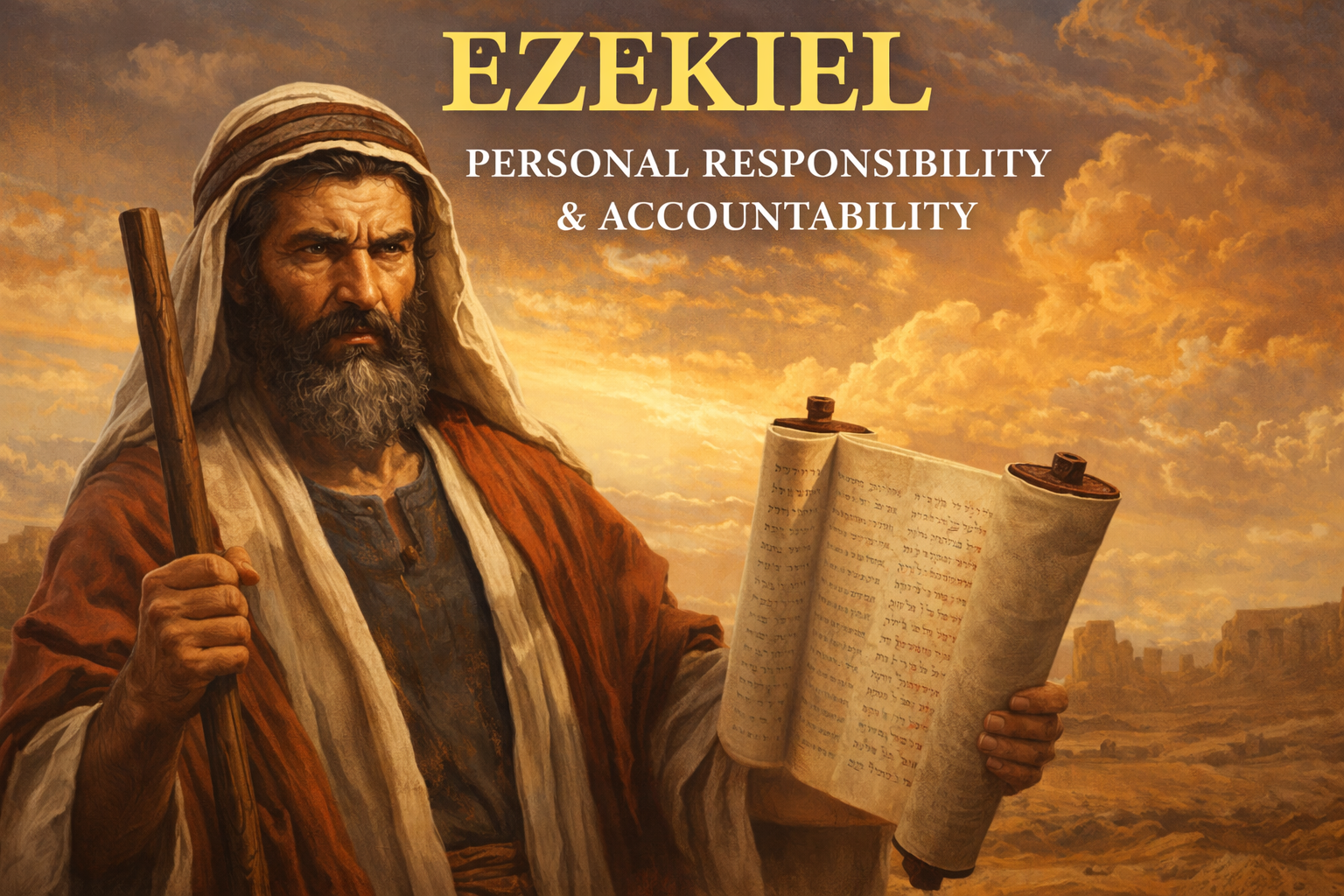
NOTE: Years ago, I served as a curriculum writer for the Sunday School Board of the Southern Baptist Convention, where I developed Spanish-language lessons to help adult Sunday School teachers prepare their classes. One series of lessons focused on the book of Ezekiel, which was published in 1986. I have since translated these lessons into English, updated the content, and reformatted them as essays. The complete series of Ezekiel studies can be found in my post “Studies on the Book of Ezekiel.” This post examines the just man of Ezekiel 18. The study in Chapter 18 will be divided into four parts:
Part 1: Personal Responsibility in Crisis
Part 2: The Just Man: Responsibility in Right Action
Part 3: The Evil Son: Responsibility in Transgression
Part 4: The Good Son: Redemption through Choice
The Text
“But if he begets a son who sees all the sins his father has committed, and considering them does not do likewise—who does not eat upon the mountains nor lift up his eyes to the idols of Israel, does not defile his neighbor’s wife, does not oppress anyone, does not withhold the pledge, does not rob, gives his bread to the hungry and covers the naked with clothing, withholds his hand from the poor, does not take interest or usury, does my judgments and walks in my statutes—he shall not die for the iniquity of his father; he shall surely live” (Ezek. 18:14–18).
The Third Generation’s Redemptive Choice
The third generation in Ezekiel’s argument teaches the same principle from yet another angle. The evil son in verses 10–13 had a son who witnessed his father’s sins. Critically, “considering them,” this grandson made a conscious moral decision: “does not do likewise.” He chose not to imitate his father’s rebellion but instead decided to follow a just and humble life before God.
This grandson possessed firsthand knowledge of evil’s consequences. He watched his father’s destructive path. Yet he made a deliberate choice to repudiate his father’s way and align himself instead with the values of his grandfather, the just man of verses 5–9. He chose righteousness not because he had never experienced evil, but despite having witnessed its bitter fruit. In this choice lies profound spiritual significance: the possibility of redemption is always open to those who will turn from iniquity.
This good son of an evil father “shall surely live like his grandfather does, by his justice; he will not pay for his father’s sin.” The emphasis falls on his own personal achievement of justice through his own choices. He will live, not because his grandfather’s righteousness reaches forward to save him, but because his own righteousness is genuine and personal. Yet his choice to emulate his grandfather’s ways rather than his father’s demonstrates that righteousness can be chosen and renewed in each generation, that redemption is not locked behind the bars of family history.
God’s Justice Affirmed: The Response to Objections
The Text
“But if you say: ‘The way of the LORD is not right,’ hear now, O house of Israel: Is my way not right? Are your ways not crooked? . . . Therefore, I will judge each one according to his ways, O house of Israel, says Yahweh the Lord. Turn back, and turn away from all your transgressions, so that iniquity will not be your downfall” (Ezek. 18:25, 30).
The People’s Objection
The LORD affirms again that He does not desire the death of the wicked (verse 23). On the contrary, the LORD desires to give life to all people. The LORD declared through Ezekiel: “But if the wicked turns away from all the sins he has committed, and keeps all my statutes and acts according to law and justice, he shall surely live; he shall not die. All the transgressions he has committed will not be remembered against him; through the justice he has practiced, he shall live” (Ezekiel 18:21-22).
Ezekiel teaches a profound truth: the individual who persists in living in evil and rebellion against God will indeed die. Yet this is not due to God’s caprice but to the inevitable consequence of one’s own choices. No one will be saved merely by good works without genuine transformation, any more than one can live while choosing death (verse 24). Yet the grace of God remains open to the repentant sinner. Repentance, genuine turning, opens the path to life.
Verse 25 expresses the people’s objection to the doctrine of each person’s responsibility before God. Probably, those who object are those who fear the personal demands of conversion, who prefer the comfort of blaming others for their predicament. God’s answer, directed to the house of Israel, indicates a hard truth: the people were not entirely innocent as they thought. Their own choices contributed to their condition.
God’s Call to Present Transformation
Now that they understand the reason for their suffering, the suffering provides an occasion for repentance. God is interested in present conduct, not in past life: “But God, having overlooked the times of this ignorance, now commands all men everywhere to repent” (Acts 17:30). The past weighs little compared to the present opportunity. God forgives the past and the present, but he is interested in the present attitude of the sinner, in the choices being made now.
This is why He invites the sinner to enjoy a new life through the path of genuine conversion, as the only means of freeing oneself from the consequences of the past and the present. The urgent call to conversion teaches that no one can blame God for treating the sinner unjustly. God wants the salvation of the sinner; the persistent invitation to repentance is proof of God’s personal interest in each sinner.
“For I do not desire the death of the one who dies, says Yahweh the Lord; turn therefore, and live” (Ezekiel 18:32). This verse encapsulates the entire message. God’s heart is bent toward life, not death. His justice is not punitive but redemptive in intention. The way of death remains open only to those who persistently reject the way of life offered to them.
The Nature of Transformation
Genuine conversion demands a new heart and a new spirit. This new disposition, this sincere desire to draw near to God, is evidence of the new covenant written in the human heart—the great messianic promise that Jeremiah and Ezekiel both anticipate (Jer. 31:31–34; Ezek 36:25–27). This is the new order of things, the dispensation of the gospel of grace, in which personal responsibility for one’s actions before a just God becomes the basis for the individual’s relationship with God through faith in Christ.
In this dispensation, the Christian’s responsibility is not to earn God’s favor through works of righteousness, but to accept the grace offered in Christ and to demonstrate that acceptance through a transformed life that reflects God’s character and justice.
The Message: Synthesis and Application
1. Individual Responsibility as the Foundation of Redemption
The central point of Ezekiel’s message is the new life the LORD offers to all who will turn and embrace it. The prophet teaches that each person is individually responsible before God for his or her actions. Those who recognize their sins and genuinely repent will have access to the new life God offers. Responsibility is not a burden that crushes but an invitation that liberates, the chance to become authors of one’s own destiny through alignment with God’s purposes.
2. Hope Spoken into Crisis
Facing Israel’s tragic experience of exile and national calamity, Ezekiel presents the expectation of a new life through the living word of God, which calls people and demands obedience, and through obedience promises life. This message of hope is heard again in our own days in the proclamation of new life through accepting Christ, the promise of a new heart and a new spirit. Just as Ezekiel spoke to a discouraged, defeated people, the Gospel speaks to contemporary hearts burdened by guilt and trapped by destructive patterns.
3. The Primacy of the Present Moment
God is interested in the present generation and in the present moment of decision. God is more interested in our present than our past. His call in the present is an immutable expression of His purpose to save even those who have already been condemned to death (Ezek. 18:32; Rom. 6:23). What you did yesterday does not determine what you will be tomorrow. The grace of God is fresh each day.
4. God’s Desire for Salvation
God is not interested in the death of the sinner (verses 23, 32) but wishes that all come to repentance (2 Pet. 3:9). This truth should motivate every sinner to accept God’s salvation in Christ. The heart of the covenant God is a heart bent toward salvation and life. To refuse that offer is to choose death, not to have death imposed upon us against our will.
Conclusion
The message of Ezekiel 18 remains contemporary and urgent. It proclaims that each person stands before God as a responsible moral agent, accountable for his or her choices, yet never beyond the reach of God’s grace. The covenant God offers does not bind us to the sins of our parents, nor can our righteousness redeem our children. Yet within this framework of personal accountability lies a profound liberation: we are not prisoners of our past, not victims of our history, not condemned by the choices of others.
In each moment, we face a choice. We can turn and live, or refuse and perish. The Living God, whose heart is bent toward our salvation, persistently calls us to turn. This call is not a burden but an invitation—an invitation to life itself, to an authentic relationship with God and his community, to restoration and wholeness.
“For I do not desire the death of the one who dies, says Yahweh the Lord; turn therefore, and live.”
Claude Mariottini
Emeritus Professor of Old Testament
Northern Baptist Seminary
If you enjoyed reading this post, you will enjoy reading my books.
VISIT MY AMAZON AUTHOR’S PAGE
BUY MY BOOKS ON AMAZON (Click here).
NOTE: Did you like this post? Do you think other people would like to read this post? Be sure to share this post on Facebook and share a link on X so that others may enjoy reading it too!
If you are looking for other series of studies on the Old Testament, visit the Archive section and you will find many studies that deal with a variety of Old Testament topics.