
The Birth of Jesus: The Christmas Story in Luke 2
The most famous birth in history is told in surprisingly few words. There's no fanfare in the account, no royal palace — just a young couple far from home, a borrowed feeding trough, and a sky full of angels announcing the news to the least likely audience imaginable.
The story of the birth of Jesus in Luke 2 is one of the most beloved passages in all of Scripture, and its details repay a careful reading. As part of our collection of bible verses for Christmas, this is the heart of the story.
Here is what happened that night, what the details mean, and why the announcement came to shepherds first.
A birth far from home
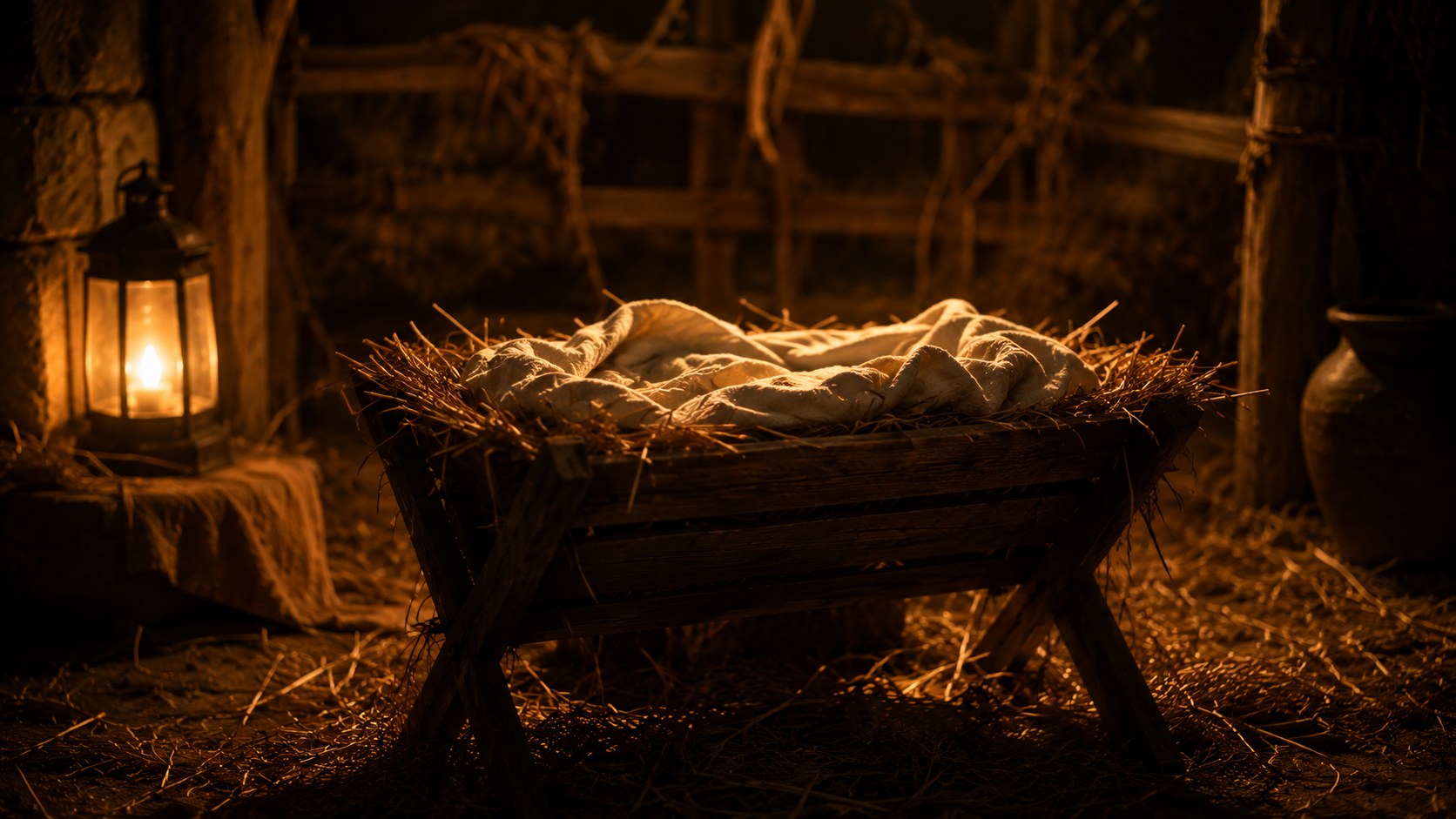
Luke sets the scene against an empire-wide census that forced Joseph and the pregnant Mary to travel to Bethlehem. There, with no proper room available, Mary gave birth and "wrapped him in cloths and placed him in a manger" (Luke 2:7). A manger is a feeding trough for animals — the first bed of the world's Savior was a place where livestock ate.
It's a deliberately humble beginning. The King of kings entered the world not in comfort or status, but in poverty and displacement. Luke wants us to feel the lowliness of it.
The announcement to shepherds
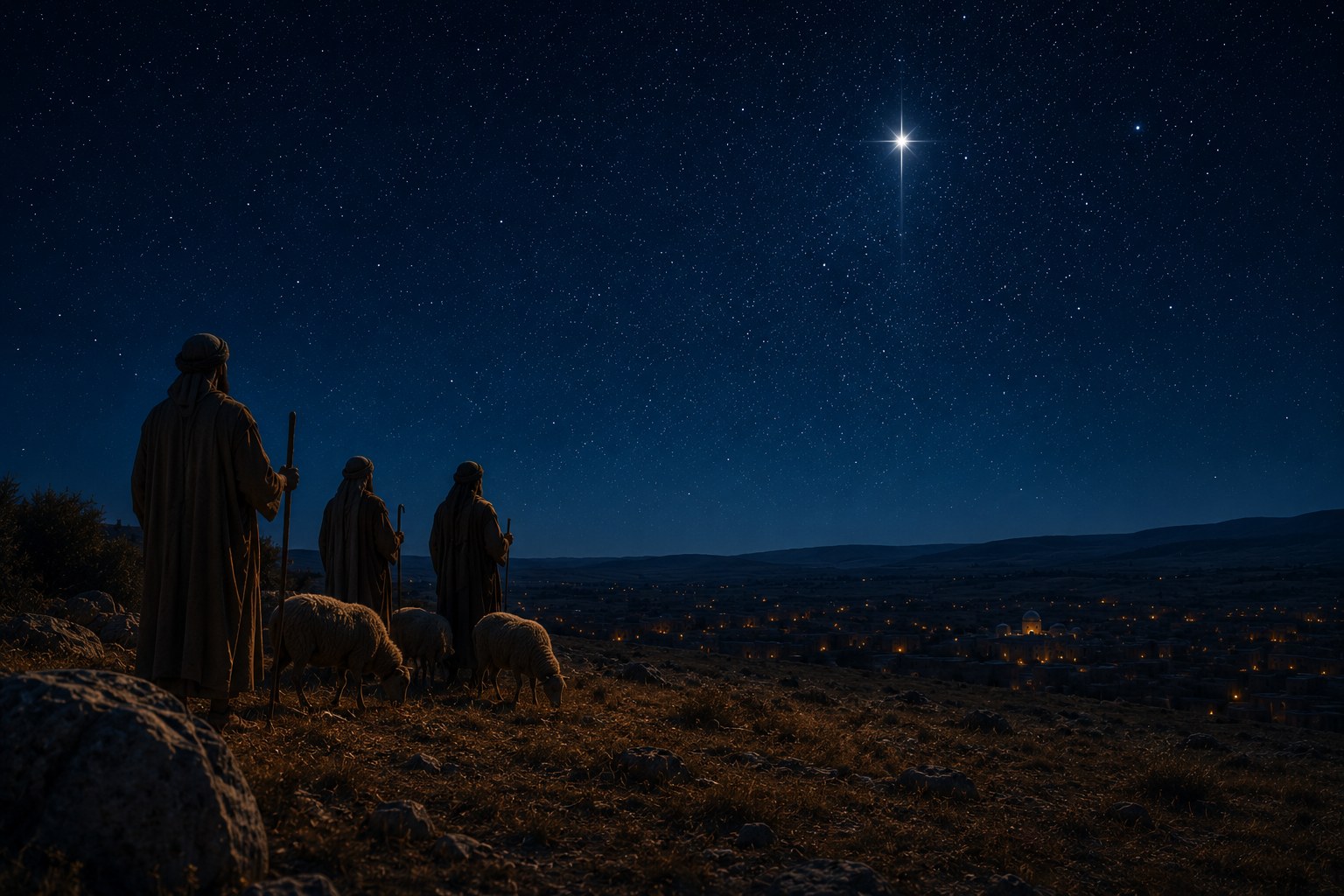
Then comes one of the great surprises of the story. The birth was announced first not to kings or priests, but to shepherds working the night shift in nearby fields. An angel told them, "Today in the town of David a Savior has been born to you; he is the Messiah, the Lord" (Luke 2:11).
Shepherds were ordinary, often looked-down-upon laborers. That God sent the announcement to them first signals something central about the whole story: this good news is for everyone, especially the overlooked. The news came to the night shift before it came to anyone important.
A note on "no room"
The familiar phrase that there was "no room" for them has often been read sentimentally — a cruel innkeeper turning them away. The text is actually more restrained and, in some ways, more poignant. The word often translated "inn" likely refers to a guest room in a family home, which was already full; the couple ended up where the animals were kept. There may have been no villain at all, only an ordinary household with no space. That detail matters because it resists turning the story into a tale of human cruelty and keeps the focus where Luke puts it: on the staggering humility of God choosing such an entrance. The Savior was born into the crowded, unremarkable reality of ordinary life — which is precisely the life he came to redeem.
Why the humble birth matters
The lowliness isn't incidental; it's the message. A God who enters the world in a manger, announced to shepherds, is a God who comes near to the humble and the ordinary. The birth of Jesus tells us, before he says a single word, what kind of Savior he is: not distant and unreachable, but near, lowly, and for the likes of us. The angels' song of "peace" (Luke 2:14) was sung over a stable, not a palace.
Returning to the birth of Jesus
However many times you've heard it, let the birth of Jesus surprise you again: God entered the world in a manger, announced to shepherds. Before he said a word, the scene told us what kind of Savior he is — near, lowly, and for the likes of us.
Frequently asked questions
Where is the birth of Jesus in the Bible?
The fullest account is in Luke 2:1-20, which describes the journey to Bethlehem, the birth in a manger, and the announcement to the shepherds. Matthew 1-2 adds the perspective of Joseph and the visit of the wise men.
Why was Jesus born in a manger?
Because there was no room in the guest quarters, the family stayed where animals were kept, and Jesus was laid in a feeding trough. The humble setting underscores that the Savior came in lowliness, near to the ordinary and overlooked.
Why were shepherds the first to hear?
Shepherds were ordinary, often undervalued workers. God announcing the birth to them first signals that the good news is for everyone, especially the humble — the news reached the night shift before anyone important.
Was there really a mean innkeeper?
The text never mentions an innkeeper. The "no room" likely refers to a full guest room in a family home, not a hotel turning them away. The point is the humility of Jesus' birth, not human cruelty.
Written by Hannaniah, an ordained minister and seminary professor based in California. For the full account, see Luke 2 on Bible Gateway or Bible Hub.