Psalm 23: I Shall Not Want
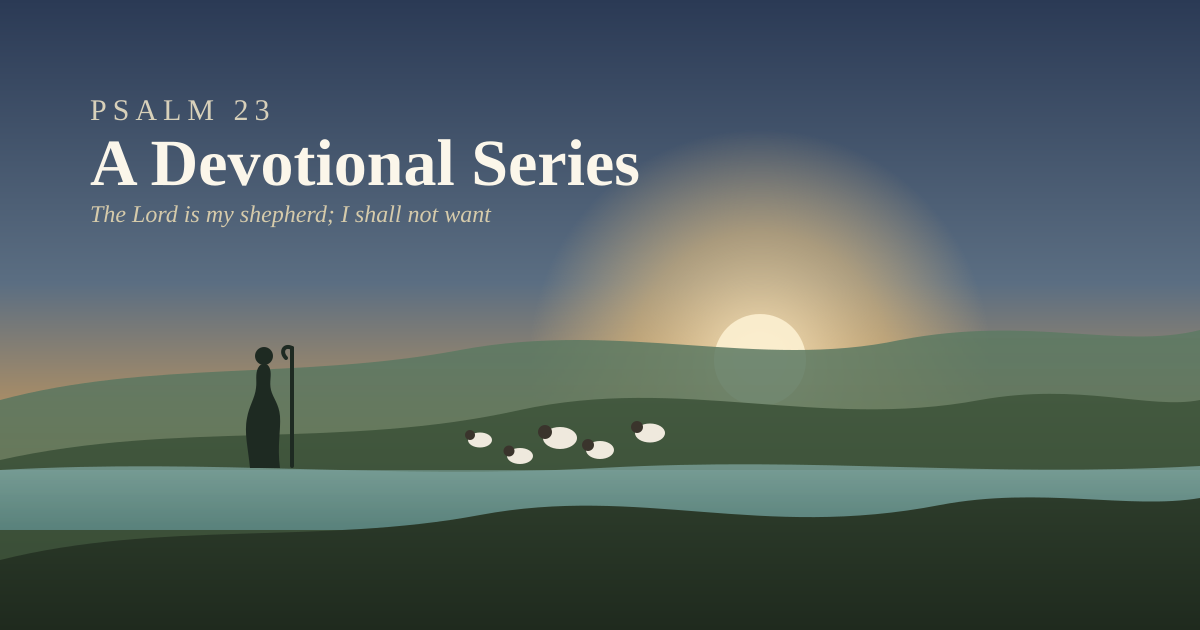
In the last study we lingered over one word, “my,” and let its personal weight settle in. Now we turn to the phrase that word makes possible: “I shall not want.”
You have probably heard this line so often that its full weight has worn smooth, like a stone handled by many hands. Read it slowly today, and let it surprise you again: I shall not want. Not “I shall not want much.” Not “I shall not want forever.” Simply: I shall not want.
This is not a promise that you will never face hardship, never feel a need go unmet in the moment, or never grieve the absence of something you long for. David, who wrote these words, knew hunger, exile, and fear firsthand. What he is declaring is something sturdier than the absence of difficulty. He is declaring that under the care of this shepherd, no genuine need of yours will finally go unmet. Whatever presses in on you, provision is not in question. Only its timing and its shape are still unfolding.
Consider the widow of Zarephath. When famine gripped the land in Elijah’s day, she had come to the end of what she had, a small handful of flour, a little oil, enough, she told the prophet, for one last meal before she and her son would starve. And yet, at the prophet’s word, she fed Elijah first, trusting a promise she had no evidence yet to believe. The flour did not run out. The oil did not fail. Day after day, through the entire famine, that one jar and that one jug supplied exactly what was needed, for as long as it was needed.
Notice what this story does not say. It does not say she woke one morning to a full storehouse. It says the flour and oil were renewed daily, just enough, for as long as the need continued. This is closer to what David means by “I shall not want” than any promise of overflowing storerooms. It is the promise of a shepherd who meets you exactly where the need actually is, again and again, for as long as the hard season lasts.
David himself had tasted this kind of provision. Fleeing for his life from Saul, hungry and without resources, he came to the priest Ahimelech and was given the only bread available, the consecrated bread set apart for the priests themselves. It was not the provision David might have chosen. It was the provision that was there, exactly when he needed it. By the time he wrote “I shall not want,” he was not reciting a doctrine he had been taught. He was remembering meals he had actually eaten, provided in ways he had not arranged and could not have arranged for himself.
This is what your own life may be teaching you as well, if you are willing to notice it. The declaration “I shall not want” rarely feels true in the moment of the need itself, when the cupboard looks bare, the diagnosis is unclear, or the situation seems unlikely to resolve. It becomes true in the looking back, when you can see that somehow, through means you would not have chosen and could not have arranged, what was genuinely necessary was supplied. The shepherd who fed a widow and a fugitive is the same shepherd who provides for you now, in ways you may only fully recognize afterward.
This confidence changes how you hold the present. You do not need to grasp at security or hoard against an uncertain future as though your provision depended entirely on your own foresight. You can plan wisely and still hold your resources with an open hand, because the promise was never that you would have everything you wanted. It was that you would not finally lack what you truly need. That is enough to build a life on.
Prayer
Lord, thank you that you are the God who fed a starving widow and a fleeing fugitive, and that you have not changed. Forgive me for the anxious grasping I fall into when my own resources look thin. Teach me to trust that you meet real need with real provision, even when it comes in a shape I did not expect or would not have chosen. Where I am waiting today for something I genuinely lack, remind me that my shepherd has not forgotten me. I ask this in the name of Jesus Christ, who never once let those who trusted him go away hungry. Amen.
Read the complete series of devotionals on Psalm 23 by clicking here: “Studies on Psalm 23.”
NOTE
If you enjoyed this devotional on Psalm 23, you will enjoy reading my new book: Praying the Psalms: Finding Your Voice in Israel’s Prayer Book.
Praying the Psalms contains a devotional on all 150 psalms.
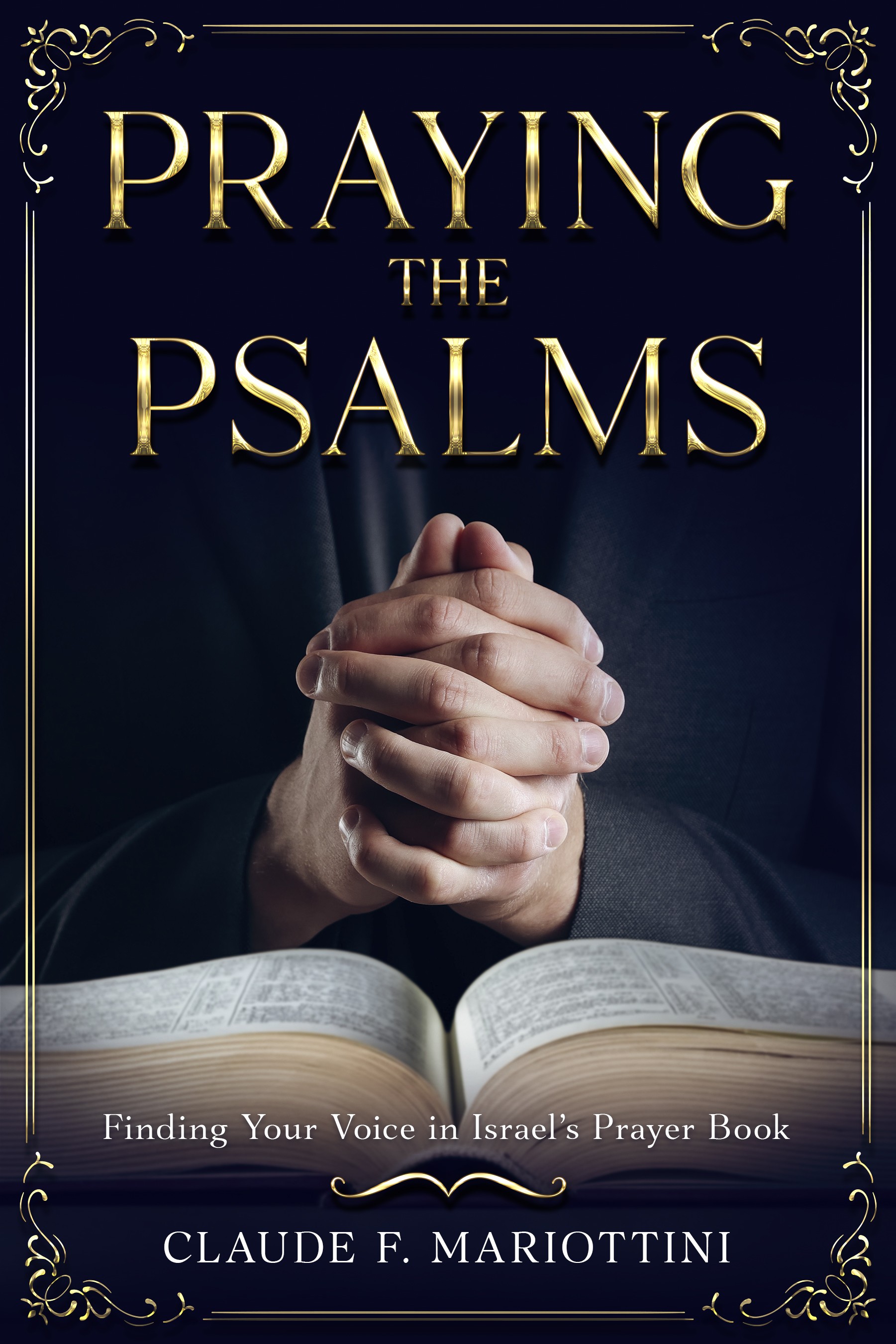
You can order the book from Ancient Path Press.
Claude Mariottini
Emeritus Professor of Old Testament
Northern Baptist Seminary
If you enjoyed reading this post, you will enjoy reading my books.
VISIT MY AMAZON AUTHOR’S PAGE
BUY MY BOOKS ON AMAZON (Click here).
NOTE: Did you like this post? Do you think other people would like to read this post? Be sure to share this post on Facebook and share a link on X so that others may enjoy reading it too!
If you are looking for other series of studies on the Old Testament, visit the Archive section and you will find many studies that deal with a variety of Old Testament topics.