Passion week 2026: Holy Thursday
By Elizabeth Prata
Holy Week is that period between Psalm Sunday and Resurrection Sunday. It is a period rightly somber, and many Christians meditate on the meaning of the different things Jesus did in His last week of earthly life.
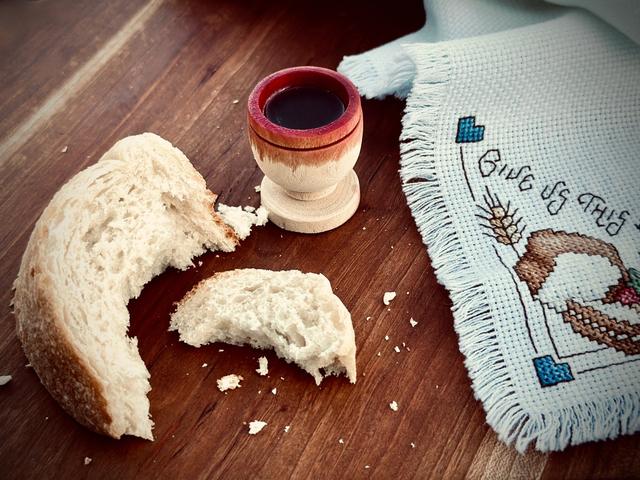
The Gospels were not written chronologically so it is hard to exactly tell when Jesus did what during that specific week, except for Thursday. This is the day Jesus washed the disciples’ feet,(John 13:3–17), established the Lord’s Supper, (Luke 22:19–20), and was the evening of His betrayal and arrest. (John 18,John 19,Isaiah 52:13-53:12).
5 reasons Christ had to die: (By Dustin Benge)
- Sin demands a penalty
(Rom. 6:23) - We could not save ourselves
(Isa. 64:6) - The law required a perfect sacrifice
(Heb. 10:4) - God is both just and the justifier
(Rom. 3:26) - Love required it.
(John 3:16; Rom. 8:32)
Yesterday I wrote about the double imputation. Now it’s Thursday. Thursday of the week between Psalm Sunday and Resurrection Sunday is momentous. It is the day Jesus celebrated the Passover with the Disciples, during ‘The Last Supper.” He also washed their feet. Judas went out from the upper room where they celebrated the supper, and betrayed Jesus.
Wow. A lot.
We could focus on so much here to unpack. This essay could be 100 pages long. But let us consider Jesus’ servant leadership in the foot washing and His commandment during the Supper to love one another. Jonathan Edwards wrote:
There were . . . symbolical representations given of that great event this evening; one in the passover, which Christ now partook of with his disciples . . . another in this remarkable action of his washing his disciples’ feet. Washing the feet of guests was the office of servants, and one of their meanest offices: and therefore was fitly chosen by our Savior to represent that great abasement which he was to be the subject of in the form of a servant, in becoming obedient unto death, even that ignominious and accursed death of the cross, that he might cleanse the souls of his disciples from their guilt and spiritual pollution. Source: Jonathan Edwards, The Works of Jonathan Edwards, vol. 2, “Sermon XVI: Christ the Example of Ministers, John 13:15, 16.
At Ligonier, we read regarding the love one another command,
The commandment to love and serve others is not unique to the New Testament. In the old covenant law, God gave His people the command, “You shall love your neighbor as yourself” (Lev. 19:18). What is distinct about the “new commandment” is that Jesus is fulfilling it in His sacrificial life and death for the redemption of His people. No one but Christ had ever so kept the command to “love your neighbor as yourself.” Through His sacrificial service, Jesus fulfilled Leviticus 19:18 for the redemption of His people and set the example of what it means to love and serve others.
He certainly did set the example. His love for His people is incredible, no, it is indescribable. His holy and pure Self left glory to live among us sinners, teaching, healing, loving. When re Rich Young RUler confidently asserted he had kept the commandments since a youth, Jesus looked at him and loved him. (Mark 10:21). The New Testament also said recipients of His personal love were Jesus loved Martha and her sister, and Lazarus. And His love extends to the world. (John 3:16).
On this day in 33AD (or so), picture Jesus stooping before the men who would soon deny Him, and one who would betray Him, washing their feet with love and tenderness. The agony of the cross will soon be expressed in His prayer in Gethsemane. Yet Jesus was teaching till the end, loving to the end, submitting to the end, and praying to the end.
As fo the betrayal, love shone through there as well. Jesus washed Judas’ feet as well as the rest. Spurgeon speaks of the calmness with which Jesus faced this cruel betrayal. Source Spurgeon sermon, “After Two Days is the Passover“.
This calmness is very wonderful, because there was so much that was bitter and cruel about his approaching death: “The Son of man is betrayed.” The Saviour felt that betrayal most keenly; it was a very bitter part of the deadly potion which he had to drink. “He that eateth bread with me hath lifted up his heel against me,” was a venomous drop that went right into his soul. David, in his great sorrow, had to say, “For it was not an enemy that reproached me; then I could have borne it: neither was it he that hated me that did magnify himself against me; then I would have hid myself from him; but it was thou, a man mine equal, my guide, and mine acquaintance. We took sweet counsel together, and walked into the house of God in company.” And it was a very, very, very bitter thing to Christ to be betrayed by Judas; yet he talks of it calmly, and speaks of it when it was not absolutely necessary, one would think, to mention that incidental circumstance.
The Master says, “Ye know that after two days is the passover, and the Son of man is betrayed to be crucified.” I cannot help reading it like this, — “Ye know that after two days is THE Passover. All the other passovers have been passovers only in name, passovers in type, passovers in emblem, passovers foreshadowing the Passover; but after two days is the real Passover, and the Son of man is betrayed to be crucified.” At any rate, I want you to notice how true it is that our Lord Jesus Christ is our Passover: “Christ our Passover is sacrificed for us.” What the paschal lamb was to Israel in Egypt, that the Lord Jesus Christ is to us. Let us think of that for a few minutes. Put the passover and the cross together, for indeed they are one.
He is a glorious Savior. He is the Lamb that was Slain.
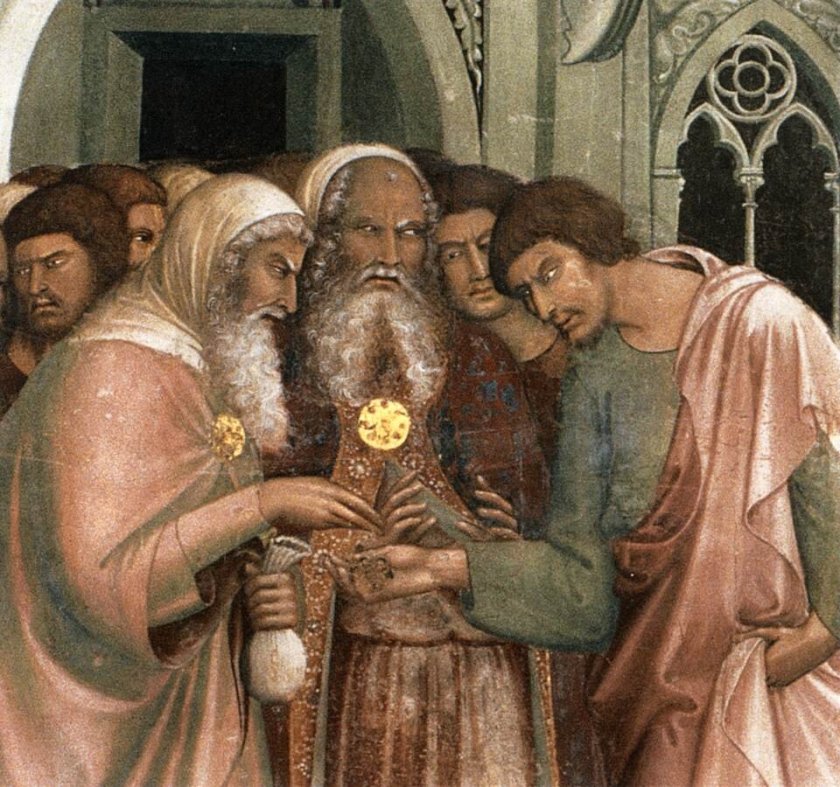
Collegiata Santa Maria Assunta, San Gimignano, Italy