Norman K. Gottwald (1926–2022)
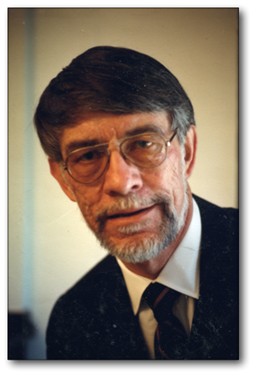
Norman K. Gottwald
Norman Gottwald was an influential biblical scholar best known for pioneering sociological and materialist approaches to the study of the Hebrew Bible. Gottwald taught at the Graduate Theological Union in Berkeley, California, and at Union Theological Seminary in New York. His work challenged traditional historical-critical models by emphasizing the social, economic, and ideological dimensions of ancient Israelite religion, particularly the experiences of marginal and peasant communities.
Gottwald is especially associated with social-scientific criticism, drawing on Marxist and neo-Marxist theory to interpret biblical texts within their concrete historical and class contexts. His scholarship reshaped debates about Israel’s origins, prophecy, and biblical theology, and provoked sustained discussion—both appreciative and critical—across Old Testament studies.
Gottwald’s major publications have influenced Old Testament scholarship for decades. His publications include The Tribes of Yahweh: A Sociology of the Religion of Liberated Israel, 1250–1050 BCE (1979). Gottwald’s landmark and most influential work, offering a sociological reconstruction of early Israel as an egalitarian tribal movement rather than a conquest-based state.
The Hebrew Bible: A Socio-Literary Introduction (1985; rev. ed. 1993), an accessible synthesis integrating literary, historical, and social analysis; All the Kingdoms of the Earth: Israelite Prophecy and International Relations in the Ancient Near East (2007), A major study of prophecy within geopolitical and imperial contexts, and The Politics of Ancient Israel (2001) in which Gottwald explores power, class, and ideology in Israel’s history and biblical texts.
Gottwald and Me
I met Gottwald when I took his course, “Old Testament Theology,” at the Graduate Theological Union in Berkeley, California, in the spring of 1972. The course was taught by Gottwald and Marvin L. Chaney, two scholars whose intellectual engagement with biblical studies reflected the ferment and social consciousness that characterized American biblical scholarship during that transformative decade. We met every Tuesday at Gottwald’s house, where his wife graciously prepared refreshments for the class each week, a gesture that fostered the collegial atmosphere essential to genuine scholarly dialogue and intellectual community.
The Course Curriculum: Foundational Voices
At the beginning of the course, we received detailed instructions on the course content and reading assignments. The pedagogical approach reflected Gottwald’s conviction that students must engage directly with the major voices shaping contemporary Old Testament theology.
For the second session, students were assigned the two volumes on Old Testament theology by Walther Eichrodt, whose magisterial work Theology of the Old Testament represented the height of systematic theological reflection on the Hebrew scriptures. We were expected to read both volumes and come prepared to discuss Eichrodt’s distinctive covenantal framework, which emphasized the covenant as the organizing principle for understanding Israel’s theological understanding.
For the third week, students were assigned Gerhard von Rad’s monumental two-volume work Old Testament Theology. Von Rad’s approach diverged markedly from Eichrodt’s systematic method, emphasizing instead the salvation history tradition and the dynamic, narrative character of Israel’s theological witness. The contrast between these two seminal works provided the intellectual foundation for understanding the state of the discipline and the theoretical debates animating Old Testament studies.
Breaking New Ground: The Tribes of Yahweh
For the remainder of the course, students discussed five chapters of a manuscript that Gottwald had prepared for a forthcoming book, which was published under the title The Tribes of Yahweh. This was not a finished work we examined, but rather early evidence of scholarly innovation still taking shape.
Those of us who were fortunate enough to be part of this study group reading the opening five chapters of The Tribes of Yahweh recognized immediately that Gottwald was breaking new ground in the sociological study of the Old Testament. His application of sociological method and theory to the origins of ancient Israel, particularly his hypothesis regarding Israel’s emergence as a social revolution against Canaanite feudalism rather than as an external military invasion, introduced approaches that would reshape Old Testament scholarship for decades. The book would indeed become an item for discussion for years to come, generating substantial scholarly conversation, critique, and refinement of the sociological approach to biblical interpretation.
A Historical Aside
Gottwald was more than a scholar; he was an activist deeply committed to justice. The course on Old Testament Theology that I took with Gottwald occurred during the height of the Vietnam War, and this context proved formative for understanding Gottwald’s own commitments to liberation theology and social justice hermeneutics.
On Monday, May 8, 1972, President Richard Nixon announced that he had ordered the mining of Haiphong Harbor and other North Vietnamese ports. On Tuesday, May 9, Gottwald cancelled the class. Rather than proceeding with scheduled discussion, he convened the students to decide how to respond to the President’s announcement. This was no academic abstraction. Gottwald believed that scholars had moral and political responsibilities that transcended the seminar room.
The students engaged in serious deliberation about how to express their opposition effectively. One student proposed that they should park cars on the Bay Bridge in Oakland to halt traffic on the bridge, essentially bringing the war protest to one of the region’s most visible arteries. In the end, the class decided to demonstrate at the People’s Park, which had already become a symbolic site of resistance against governmental authority.
Nixon’s announcement sparked a massive wave of anti-war protests across the United States, with Berkeley serving as one of the epicenters of resistance. Demonstrators in Berkeley tore down the fences at People’s Park as a symbolic act of defiance against the government. Because the park had become a symbol of “the war at home,” the conflict between authorities and citizens over public space and freedom, the 1972 anti-war riots and the struggle for the park merged into a single event often called the “The 1972 War of People’s Park.” Several students in Gottwald’s class participated actively in these demonstrations.
This convergence of Gottwald’s teaching, scholarship, and activism proved formative for those of us in his classroom. The linking of biblical interpretation to social justice concerns, the recognition that scholarly work and political commitment need not be compartmentalized, and the understanding that the biblical text speaks prophetically to questions of justice and oppression, these convictions became central to how many of us conducted our subsequent scholarly work.
Several years later, while pursuing my doctoral studies under Joseph Callaway at The Southern Baptist Theological Seminary in Louisville, Kentucky, I recommended that we discuss The Tribes of Yahweh in the colloquium that he was leading for advanced Old Testament Studies. At that colloquium, I had the opportunity to share with the group my experience of studying the first five chapters with Gottwald and to place his work within the broader development of sociological approaches to ancient Israel.
When I completed my doctoral dissertation on “The Problem of Social Oppression in the Eighth Century Prophets,” a topic that reflected the influence of Gottwald’s own commitments to understanding prophetic critique of social injustice, I invited Gottwald to serve as my outside reader. He accepted my invitation graciously. On Gottwald’s Wikipedia page, I am listed as one of his students, a designation that remains a source of genuine pride.
I have written a brief biography of Norman Gottwald. Click here to download the PDF.
Bibliography
Eichrodt, Walther. Theology of the Old Testament. Translated by John A. Baker. 2 vols. Philadelphia: Westminster Press, 1961–1967.
von Rad, Gerhard. Old Testament Theology. Translated by David M. G. Stalker. 2 vols. New York: Harper and Row, 1962–1965.
Gottwald, Norman K. All the Kingdoms of the Earth: Israelite Prophecy and International Relations in the Ancient Near East. New York: Harper & Row, 1964.
Gottwald, Norman K. The Tribes of Yahweh: A Sociology of the Religion of Liberated Israel, 1250–1050 BCE. Maryknoll, NY: Orbis Books, 1979.
Gottwald, Norman K. The Hebrew Bible: A Socio-Literary Introduction. Philadelphia: Fortress, 1985.
Gottwald, Norman K. The Politics of Ancient Israel. Library of Ancient Israel. Louisville: Westminster John Knox, 2001.
Mariottini, Claude F. “Norman Gottwald.” In The Encyclopedia of Christian Literature, edited by George T. Kurian and David John Seel Jr., 2 vols., 2:340–341. Lanham: Scarecrow Press, 2010.
Claude Mariottini
Emeritus Professor of Old Testament
Northern Baptist Seminary
If you enjoyed reading this post, you will enjoy reading my books.
VISIT MY AMAZON AUTHOR’S PAGE
BUY MY BOOKS ON AMAZON (Click here).
NOTE: Did you like this post? Do you think other people would like to read this post? Be sure to share this post on Facebook and share a link on X so that others may enjoy reading it too!
If you are looking for other series of studies on the Old Testament, visit the Archive section and you will find many studies that deal with a variety of Old Testament topics.