Letters To 7 Churches In The Book Of Revelation - Thyatira -
In this series of Bible Study articles, Letters To 7 Churches In The Book Of Revelation, we are going to study the letters to 7 churches in the book of Revelation. These letters to 7 churches are in Revelation 2 and 3. These are letters and messages that Jesus told John to send to 7 actual churches located in Asia Minor. Asia Minor is Turkey in modern times.
Some of the letters to the 7 churches are important messages to us today, because there are many similarities to today’s modern churches, especially in America. Specifically the letters to the churches in Ephesus, Pergamum, Thyatira, and Laodicea.
John was exiled to the island of Patmos for his faithfulness to Jesus, and because of his witness to others about Jesus. Prior to his exile to Patmos John was the leader and pastor of the church in Ephesus.
In the first part of this series of Bible study articles about the Letters To 7 Churches In The Book of Revelation we studied Revelation 1. Specifically about how John was led to write the Book of Revelation. And how Jesus appeared to John when he was in exile on the island of Patmos, and Jesus’ appearance.
In Part 2 we studied the letter to the church of Ephesus in Revelation 2:1-7.
In Part 3 we studied the letter that Jesus had John write and send to the church of Smyrna in Revelation 2:8-11
In Part 4 we studied Jesus’ letter to the church of Pergamum in Revelation 2:12-17.
Now we will study the letter that Jesus sent through John to the church of Thyatira in Revelation 2:18-29.
Letters to 7 Churches In the Book of Revelation
The City of Thyatira
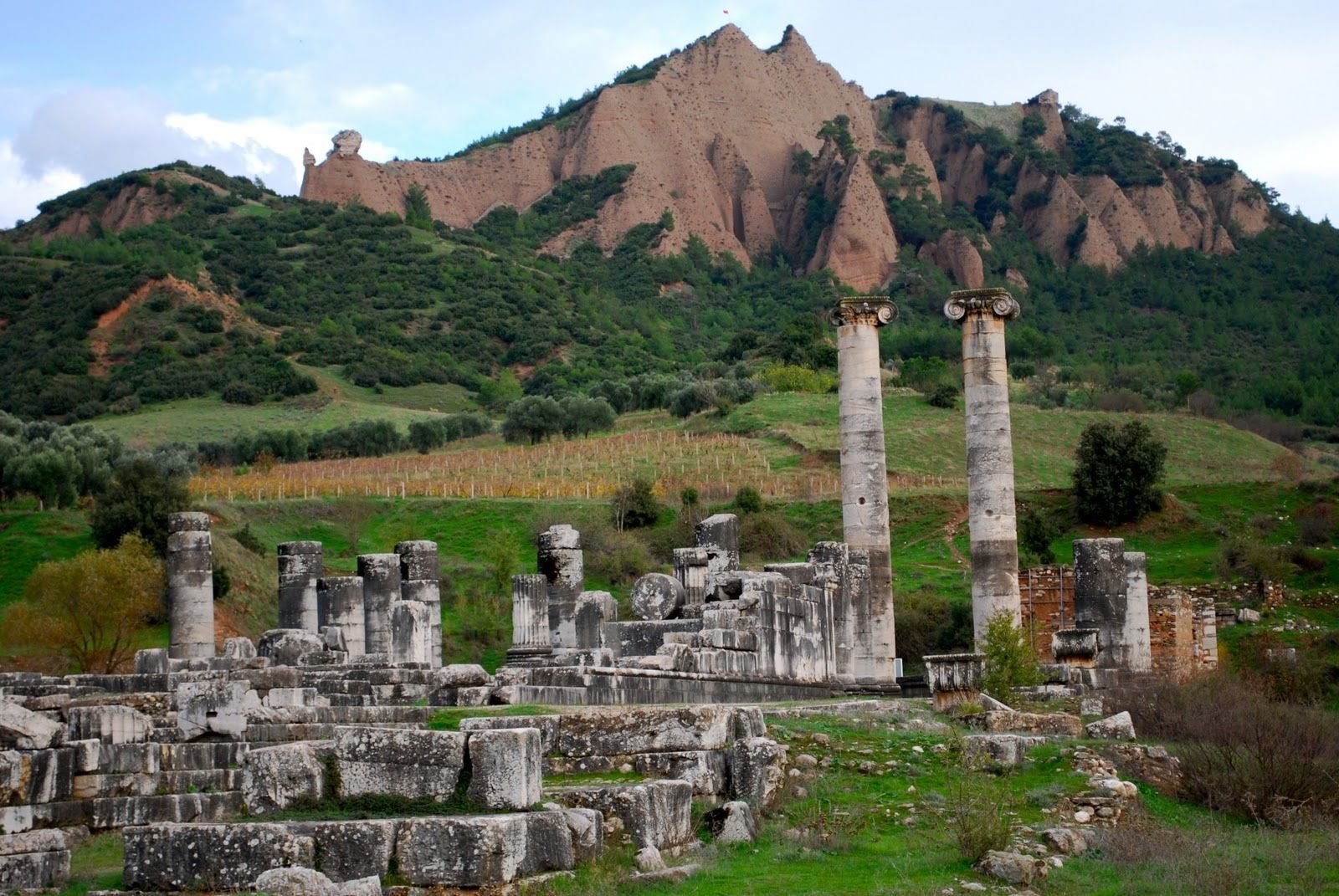
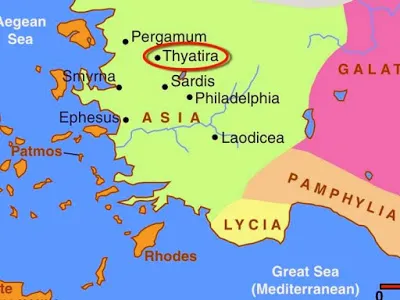
Thyatira was an ancient Roman city located approximately 38 miles southeast of Pergamum, and 32 miles north of Sardis. Sardis is the next letter that Jesus sends through John to the church in Revelation 3. Thyatira is now the modern city of Akhisar in Turkey.
Thyatira was basically a strategic Roman city that was used to deter and defend against enemies that were on their way to the capitol city of Pergamum. Thyatira was attacked, destroyed, and rebuilt several times over the course of ancient history.
Thyatira was located on the trade route located between Laodicea and the regional capitol of Pergamum. It was a prosperous smaller city known for it’s purple dyes and it’s trade and craftsmen guilds. The guilds were basically union type organizations that had a lot of power and influence, and the guilds in Thratira were well known for being the best organized guilds compared to other cities.
The Spiritual Makeup of Thyatira
Like the other cities of Asia Minor, there was considerable pagan worship and idolatry. There was a temple and considerable worship of the pagan god Apollo in Thyatira.
Being a part of the Roman Empire, there was also considerable pressure and expectation to worship the Roman emperor. The emperor of the Roman Empire was considered to be a god, and you would be expected to worship and publicly declare your worship & loyalty to the emperor. At the time of the letter to Thyatira and the other churches, Domitian was the Caesar, or Roman emperor. He was especially cruel to anyone who followed Christ.
A Christian believer who wanted to be employed in the crafts and trade guild would have been under a lot of pressure to submit to the worship of pagan gods. If you did not reject Christ and start worshiping the pagan gods then you would have a hard time being employed in the main trades in Thyatira.
Letters to 7 Churches In the Book of Revelation
Background & History of the Church in Thyratira
Like the churches of Smyrna and Pergamum, there is no record of the official start of the church in Thyratira in the Bible. Paul most likely played an important role in the founding of this church also.
In Acts 16 Paul and some disciples traveled to Philippi, which was located in modern day Greece. They spoke to and shared the Gospel to a group of women gathered by a river. A woman named Lydia from Thyatira was one of the women. She was a wealthy woman involved in the making and selling of purple cloth. She responded to the Gospel and became a believer, as did her entire household. Paul later visited Thyatira, and he and Lydia both most likely played an important role in establishing the church there.
“ On the Sabbath we went outside the city gate to the river, where we expected to find a place of prayer. We sat down and began to speak to the women who had gathered there. One of those listening was a woman from the city of Thyatira named Lydia, a dealer in purple cloth. She was a worshiper of God. The Lord opened her heart to respond to Paul’s message. When she and the members of her household were baptized, she invited us to her home. “If you consider me a believer in the Lord,” she said, “come and stay at my house.” And she persuaded us.” – Acts 16:13-15
Also, when Paul was on his third missionary journey he stayed 3 years in Ephesus, and the result shown in Acts 19 was that everyone in Asia (Asia Minor) heard the Gospel, both Jews and Greeks. The missions efforts of Paul and other disciples most likely resulted in the church being established in Thyratira.
We know that the church of Thyatira, like the churches in Ephesus, Smyrna, Pergamum, and others suffered a great deal of persecution and opposition from Satan. Early in the letter Jesus sent to the Thyratira church He mentions “ I know your deeds, your love and faith, your service and perseverance” in Revelation 2:19. Their love and faith, as well as their perseverance are mentioned because of the persecution and pagan influences that were very present and influential in their culture.
Letters to 7 Churches In the Book of Revelation
Letter to the Church in Thyatira
Here is the letter to the church in Thyatira in Revelation 2:18-29:
“To the angel of the church in Thyatira write: These are the words of the Son of God, whose eyes are like blazing fire and whose feet are like burnished bronze. I know your deeds, your love and faith, your service and perseverance, and that you are now doing more than you did at first.
Nevertheless, I have this against you: You tolerate that woman Jezebel, who calls herself a prophet. By her teaching she misleads my servants into sexual immorality and the eating of food sacrificed to idols. I have given her time to repent of her immorality, but she is unwilling. So I will cast her on a bed of suffering, and I will make those who commit adultery with her suffer intensely, unless they repent of her ways. I will strike her children dead. Then all the churches will know that I am he who searches hearts and minds, and I will repay each of you according to your deeds.
Now I say to the rest of you in Thyatira, to you who do not hold to her teaching and have not learned Satan’s so-called deep secrets, ‘I will not impose any other burden on you, except to hold on to what you have until I come.’
To the one who is victorious and does my will to the end, I will give authority over the nations— that one ‘will rule them with an iron scepter and will dash them to pieces like pottery’ —just as I have received authority from my Father. I will also give that one the morning star. Whoever has ears, let them hear what the Spirit says to the churches.” – Revelation 2:18-29
Eyes Like Blazing Fire
The letter to the church of Pergamum begins with a partial description of Jesus as John saw him in Revelation 1. Jesus is described as the one who has “eyes like blazing fire”.
“…and his eyes were like blazing fire.” – Revelation 1:14
When Jesus appears at the end of the Great Tribulation in Revelation 19, when he defeats the Antichrist, the false prophet, and all of Satan’s followers and throws them into the lake of fire, he is described in this way:
“ I saw heaven standing open and there before me was a white horse, whose rider is called Faithful and True. With justice he judges and wages war. 12 His eyes are like blazing fire,…” – Revelation 19:11-12
Jesus with eyes like blazing fire shows that He sees and knows all things. He can see into our hearts and minds. And Jesus knows not only all of our actions and behavior, but also the thoughts and motives behind them. He is all seeing and all knowing. Nothing can be hidden from Him.
Jesus is portraying in His letter to the church of Thyatira that He sees and knows their hearts and all of their actions.
Feet Like Burnished Bronze
Jesus also describes Himself as the One “whose feet are like burnished bronze.” As we discussed in Part 1 of this series and how John saw Jesus in Revelation 1, the feet like burnished bronze refers to Jesus as The Judge.
In Revelation 19:15 Jesus is the One whose feet “treads the winepress of the fury of the wrath of God Almighty.” God’s wrath, judgement, and punishment, reserved for all those that oppose and rebel against God, and who rejects the Son Jesus as Lord and Savior, will be carried out by Jesus.
At the final great white thrown judgement as described in Revelation 20, which comes at the end of Jesus’ 1000 year reign on earth, He is the Judge.
“ Then I saw a great white throne and him who was seated on it. From his presence earth and sky fled away, and no place was found for them. And I saw the dead, great and small, standing before the throne, and books were opened. Then another book was opened, which is the book of life. And the dead were judged by what was written in the books, according to what they had done. And the sea gave up the dead who were in it, Death and Hades gave up the dead who were in them, and they were judged, each one of them, according to what they had done. Then Death and Hades were thrown into the lake of fire. This is the second death, the lake of fire. And if anyone’s name was not found written in the book of life, he was thrown into the lake of fire.” – Revelation 20:11-15
Why is Jesus describing Himself to the church of Thyratira like this? With eyes of blazing fire and feet of burnished bronze? Because He is about to rebuke and condemn many in the church of Thyratira, and proclaim judgement on them.
Letters to 7 Churches In the Book of Revelation
Commendations from Jesus
Before condemning and pronouncing judgement on some in the church of Thyatira, Jesus commends them for some things.
” I know your deeds, your love and faith, your service and perseverance, and that you are now doing more than you did at first. – Revelation 2:19
Jesus says that He knows their deeds, and their love and faith, and their service and perseverance. The church was doing good things. And unlike the church in Ephesus, their good deeds were coming from their love for Jesus and for others.
And Jesus commends them for their faith. Despite the many difficulties and even dangers of being a follower of Jesus in those times, they remained faithful and they persevered.
And Jesus commends them because they were growing as a church. He mentions this in terms of growth in their service and ministry and influence in their region. They were doing more for the kingdom than they were at first.
Letters to 7 Churches In the Book of Revelation
A Rebuke And Condemnation From Jesus
“Nevertheless, I have this against you: You tolerate that woman Jezebel, who calls herself a prophet. By her teaching she misleads my servants into sexual immorality and the eating of food sacrificed to idols. I have given her time to repent of her immorality, but she is unwilling. So I will cast her on a bed of suffering, and I will make those who commit adultery with her suffer intensely, unless they repent of her ways. I will strike her children dead. Then all the churches will know that I am he who searches hearts and minds, and I will repay each of you according to your deeds.” – Revelation 2:20-23
Right after the commendations that Jesus gave to the church in Thyatira, He gave a strong condemnation to many in the church. He begins by saying “Nevertheless, I have some things against you.”
A Destructive Pattern In The Churches in Revelation
You can see a destructive pattern emerging from Jesus’ letters to the churches in Ephesus, then Pergamum, and now Thyatira. The church in Ephesus had lost their First Love – Jesus. They were a very busy church and doing some good things still, much like many churches today in America and other parts of the world. But they left their love and passion for Jesus and God’s Kingdom. They “left their first love” means that they rejected Jesus as their First Love, and turned to other things as their first love.
Then in Pergamum Jesus condemned some of them for compromising their faith and relationship with Jesus. They started to compromise and then drift back into their old sinful life and ways, and back into idolatry. He warned them to repent or face the consequences.
The last part of the destructive pattern is what Jesus condemns the church in Thyatira for.
Letters to 7 Churches In the Book of Revelation
Leave Your First Love -> Compromise -> Tolerance of Sin & Corruption
“Nevertheless, I have this against you: You tolerate that woman Jezebel, who calls herself a prophet. By her teaching she misleads my servants into sexual immorality and the eating of food sacrificed to idols. I have given her time to repent of her immorality, but she is unwilling. So I will cast her on a bed of suffering, and I will make those who commit adultery with her suffer intensely, unless they repent of her ways. I will strike her children dead. Then all the churches will know that I am he who searches hearts and minds, and I will repay each of you according to your deeds.” – Revelation 2:20-23
Somehow the church in Thyatira, despite growing and doing good works out of love for the Lord and for others, allowed false and corrupt teaching into their church. From a woman nonetheless, that claimed to be a prophetess. The letter names her Jezebel.
Most likely Jesus used this name because of the evil queen Jezebel in the Old Testament. Jezebel was the wife of King Ahab, and she led he and Israel to forsake the Living God and to worship the false gods Baal and Asherod. Jezebel’s father was a priest of the pagan god Baal. The priests of Baal were demented people who participated in demented sexual practices as part of their “worship”.
The original Pheonician name for Jezebel meant “Baal exalts”, which is indicative of Jezebel’s family worship of Baal. The Hebrew version of the name is אִיזֶבֶל (ʾIzeḇel), which takes out the part about Baal, and means “unexalted” or “not honorable”. Whether the false prophetess or teacher in Jesus’ letter to church in Thyatira is actually named Jezebel, or this is symbolic of her evil practices and teachings doesn’t really matter. The point is that she managed to somehow corrupt many in the church and get them to not only tolerate sin and evil, but to actively participate in idolatry and sexual immorality in their lives.
Tolerance of Sin Leads to A Corrupted Life
This is a cycle that happens to many Christians and churches. In the beginning there is a love and passion for Jesus, and for being holy and set apart from the world for Him. And for the building of His kingdom, meaning reaching the lost and making disciples.
But then their is a slow fade in their hearts from Jesus. Maybe it is due to business in their lives or careers. Maybe it is due to other reasons or distractions.
This slow fade and change of heart then leads to some type of compromise in their lives. Perhaps it is in their spending less and less time with Jesus in prayer in in studying His word. Perhaps it is compromise with some old sin or pattern in their lives. The problem with compromise, even if it begins slowly and in small ways, is that it will lead to bigger sins and bigger compromises.
And then ultimately this will lead into complete tolerance and acceptance of sin and even evil practices. And eventually to corruption of your relationship with Jesus and your life.
God’s Commandments & Instructions
Right after God saved His chosen people out of Egypt He gave Moses the 10 Commandments (Exodus 20). And He gave Moses many instructions about being pure and holy, or “set apart” from the rest of the world (book of Leviticus). And from the pagan false god worship and pagan immorality that they had begun to take part of while they were slaves in Egypt. You can read about the many pagan false gods of Egypt and how they tied in to the 10 plagues God sent upon Egypt here: The 10 Plagues of Egypt & The false Egyptian gods
Also, the people that possessed the Promised Land that God was sending them to also practiced the same pagan false god worship and immorality. To the point that some were sacrificing their children to the pagan god Molek.
And God also gave many instructions about worship and their covenant with God in the book of Leviticus. The main points of God’s commandments and instructions were:
-
And God spoke all these words: “I am the Lord your God, who brought you out of Egypt, out of the land of slavery. “You shall have no other gods before me. “You shall not make for yourself an image in the form of anything in heaven above or on the earth beneath or in the waters below. You shall not bow down to them or worship them; for I, the Lord your God, am a jealous God, punishing the children for the sin of the parents to the third and fourth generation of those who hate me, but showing love to a thousand generations of those who love me and keep my commandments.” – Exodus 20:1-6
- In Leviticus 18 they are instructed to not participate in the pagan immorality that was in Egypt and also would be in the Promised Land. They were told not to have sexual relations with your mother. Or with your fathers wife, or with your daughter, and other types of incest. And not to have homosexual relations, or sexual relations with animals. And they were instructed to not sacrifice their children to Molek. These are the type of pagan practices and immorality that would be prevalent in the culture of the people that were living around them.
- In Leviticu 19 they are instructed to be holy. The Israelites were to be holy and set apart from all evil pagan worship and immorality. “The Lord said to Moses, “Speak to the entire assembly of Israel and say to them: ‘Be holy because I, the Lord your God, am holy.” – Leviticus 19:1-2
In the New Testament the followers of Jesus are also told to be holy and set apart from the world. And warned to not compromise their faith and return to the practices of the world.
“Do not love the world or the things in the world. If anyone loves the world, the love of the Father is not in him. For all that is in the world—the desires of the flesh and the desires of the eyes and pride of life—is not from the Father but is from the world. And the world is passing away along with its desires, but whoever does the will of God abides forever.” – 1 John 2:15-17
“ I appeal to you therefore, brothers, by the mercies of God, to present your bodies as a living sacrifice, holy and acceptable to God, which is your spiritual worship. Do not be conformed to this world, but be transformed by the renewal of your mind, that by testing you may discern what is the will of God, what is good and acceptable and perfect.” – Romans 12:1-2
“But you are a chosen race, a royal priesthood, a holy nation, a people for his own possession, that you may proclaim the excellencies of him who called you out of darkness into his marvelous light.” – 1 Peter 2:9
Letters to 7 Churches In the Book of Revelation
Jesus Pronounces Judgement Against Their Tolerance of Sin
“I have given her time to repent of her immorality, but she is unwilling. So I will cast her on a bed of suffering, and I will make those who commit adultery with her suffer intensely, unless they repent of her ways. I will strike her children dead. Then all the churches will know that I am he who searches hearts and minds, and I will repay each of you according to your deeds.” – Revelation 2:21-23
Jesus states that He had given Jezebel the false prophetess or teacher, and her followers, time to repent. God will always give us a chance to confess and repent of our sins, in order to turn back to Him and restore our fellowship with Him. But she, and the people who had tolerated and then openly practiced the idolatry and sexual immorality that she apparently taught them was ok, refused to repent. They refused to stop tolerating the evil and sinful practices. They decided they wanted to continue to do these things that are repulsive and offensive to God. Apparently the sins and evil practices that many in the church were tolerating and participating in were serious enough that Jesus called them “the deeper things or secrets of Satan” in Revelation 2:24.
And so Jesus said enough! Since they didn’t take the chance Jesus gave them to repent and correct the terrible problem, He would take action. He announced that He was going to cast her on a bid of suffering. And that He would deal with those that were following her teaching and evil practices, and cause them to suffer intensely also. Unless they repent.
Jesus also warned that He may even kill her “children”. Perhaps this was her family because they were also participating in her evil practices. Most likely it means that Jesus was referring to the people in the church that were doing the things that God finds evil and corrupt.
Jesus Is Serious About Tolerating Sin & Evil Practices
The threat to kill Jezebel’s children shows the seriousness of the offense against God when we allow ourselves to compromise and then tolerate and practice sin and evil things in our lives. God first tries to get our attention through His word the Bible. There are many principles and commands in God’s word against these things, along with many warnings.
When we do not pay attention to God speaking to us through His word, He will then start bringing discipline into our lives. And if we continue to resist and rebel, then God will bring more serious discipline or even suffering. And in the Bible there are cases where God brought death as a punishment.
Ananias and his wife Sapphira lying to the disciples and the Holy Spirit in Acts 5 is a good example. 1 Corinthians 11 gives an example of people in the church in Corinth that were desecrating the Lord’s Supper at church. Pauls describes that some were eating all of the food and others were not getting any. And also some others were even drunk. Then Paul mentions “For this reason many are weak and sick among you, and many sleep.” in 1 Corinthians 11:30
Also, 1 John 5:16-17 mentions a “sin leading to death”: “If anyone sees his brother sinning a sin which does not lead to death, he will ask, and He will give him life for those who commit sin not leading to death. There is sin leading to death.”
No specific sin is mentioned in the Bible as The “sin leading to death”. More than likely it is any sin that a believer in the church commits that is very dangerous to the rest of the church. A sin that could lead others in the church astray, and a sin that is a threat to the spiritual health of the church and other believers. Essentially God is protecting the integrity of the church and more importantly protecting the integrity of His name. And protecting other believers in the church.
Letters to 7 Churches In the Book of Revelation
Encouragement For Those Who Were Not Corrupt
“Now I say to the rest of you in Thyatira, to you who do not hold to her teaching and have not learned Satan’s so-called deep secrets, ‘I will not impose any other burden on you, except to hold on to what you have until I come.’
To the one who is victorious and does my will to the end, I will give authority over the nations— that one ‘will rule them with an iron scepter and will dash them to pieces like pottery’ —just as I have received authority from my Father. I will also give that one the morning star. Whoever has ears, let them hear what the Spirit says to the churches.” – Revelation 2:24-29
The solution to compromising your faith, conforming to the world, and to sin is always repentance. God has given believers a way to restore their fellowship with Jesus that is broken by sin. It is confession with repentance.
“ If we confess our sins, he is faithful and just and will forgive us our sins and purify us from all unrighteousness.” – 1 John 1:9
Confession that is mentioned in 1 John 1:9 is not just saying you are sorry. It means to confess, or agree with God, about your sin. And then to repent and turn away from the sin.
For those in the church in Thyatira that did not tolerate the sins and evil practices that many others did, Jesus encouraged them to continue to hold onto Him and continue in their walk with Him.
And then Jesus says that those that are victorious and does His will to the end, that they will be rewarded. Jesus will give those that persevere and faithfully follow Him to the end the reward of authority and the right to join Him in ruling in His 1000 year kingdom that follows the Great Tribulation.
The Greek word for “rule” in Revelation 2:26-27 where Jesus says He will give His faithful followers authority over the nations, to rule… means “to rule and to shepherd” the nations. We will have the reward of joining Jesus and helping Him to rule in His kingdom, and to help Jesus to shepherd the people of the nations.
When Jesus mentions that true followers of His “will rule them with an iron scepter and will dash them to pieces like pottery’, He is quoting Psalm 2:9. This refers to how Jesus will deal with any of the threats to His sheep. Jesus, with the help of His true followers, will reign and shepherd His sheep in the kingdom. And He will deal harshly with any that are living during the 1000 year kingdom on earth that are a threat to His sheep.
Being A Good Church Member vs Being A True Disciple of Jesus
In our more than 20 years of missions ministry we have helped &/or preach in &/or trained more than 250 churches in 33 countries. And we have visited many more churches, and also have met with many more church leaders and pastors. In the US we have tried to help 58 churches, offering preaching, training, and help to reach the lost and make disciples. We never ask for support or offering, we only offer help. Only 3 have had any interest in receiving help in these “first importance” things.
There is a noticeable lack of “first love” passion for Jesus in many church leaders today. And there is a noticeable lack of passion in the leaders and in many people in churches today for the “first importance” things of taking the Gospel out to the lost and making true disciples of Jesus. Most of the churches in America and other places have replaced evangelism with social assistance and other ministry events and projects.
And most churches have replaced teaching believers how to be a true & passionate follower and disciple of Jesus with teaching people how to be a good church member. There is a big difference between being a good church member and being a true and passionate follower/disciple of Jesus. A good church member is taught that he or she needs to attend the worship service to worship God, and attend the Bible study on Wednesday night and a small group if they have them. And they need to serve somewhere in the church, and also give to the church.
So many people in churches end up having a “What a good Christian or church member should do list”. What is interesting (and sad) is to see that most churches do not teach the “First Importance” things anymore. Which again are having Jesus as your First Love and having close fellowship with Him. And our Kingdom building mission of 1) taking the Gospel everywhere and reaching the lost, and 2) teaching believers how to be passionate and true disciples/followers of Jesus.
And there are many people in many churches today that are beyond compromising their walk with Jesus. What started out as a small compromise is now full blown tolerance of sin and evil. And even openly practicing and boasting about things that are offensive to God. Things that God calls abominations in His word. Unless there is repentance God will be forced to deal with them, for the sake of His name and the integrity of His church and people.
Pursuing Intimacy With God
Pursuing Intimacy With God is committed to helping you with the most important thing in your life… your intimacy with God , your fellowship with Him, and your partnership with God in His Kingdom work & mission.
There are hundreds of Bible verses and great truths & promises in the Pursuing Intimacy With God studies book
eBook version of Pursuing Intimacy With God
Pursuing Intimacy With God ebook Kindle version
Salvation: The Requirements for True Salvation
More Links
Preview the Pursuing Intimacy With God Studies Book
God’s Promises In The Bible
God’s Promises In The Bible – Part 2
Seek God With All Your Heart
Seek God With All Your Heart – Part 2
The Names of God & Their Meaning
The Names of Jesus Christ
8 Keys to Intimacy With God
8 Keys to Intimacy With God – Part 2
Read God’s Word The Bible
Read God’s Word The Bible – Part 2
Meditate on God’s Word The Bible
Praise & Worship God
Praise & Worship God – Part 2
God’s Top Priority For The Church
Praise Is A Weapon for Spiritual Warfare
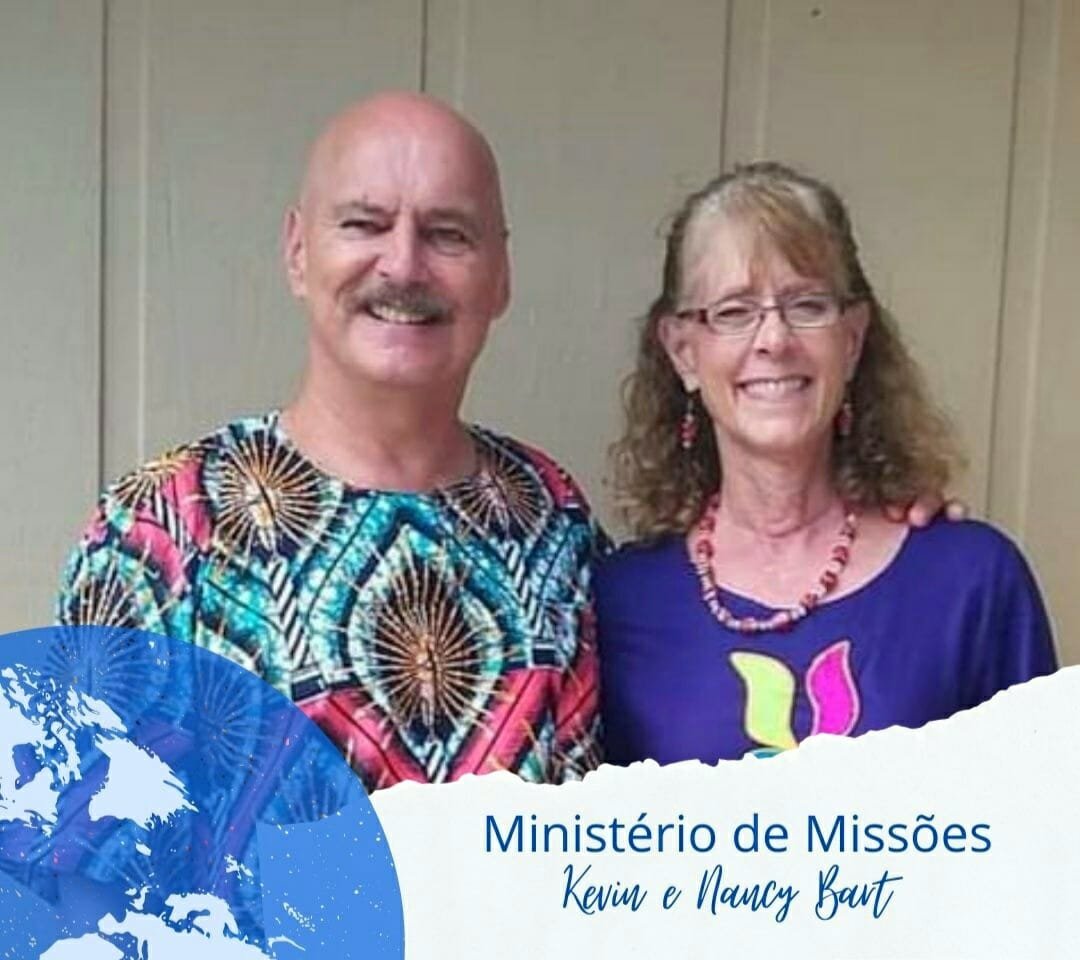
Kevin Bart has been a Jesus follower for over 40 years. Kevin has taught Bible study classes, small groups, and discipleship classes for many years. He developed Pursuing Intimacy With God after many years of seeking God and studying His word.
Kevin is a former business owner, and current international missions ministry leader with more than four decades of combined business and ministry experience. After building and running a successful business for 23 years, with God’s guidance and blessings, he sold his company to dedicate himself to full-time global missions.
For over 20 years, Kevin and his wife Nancy have led an international missions ministry. Utilizing learned business and financial management skills, as well as knowledge and experience in travel points and miles, to date they have had 48 mission trips to 33 countries in the Caribbean, Central America, South America, Europe, Africa, and Asia.