How to Read the Bible — Scripture Reading for Truth, Clarity, and Spiritual Insight - Booty and Treasures fer All!
The Bible is unlike any other book. It is living and active (Hebrews 4:12), and it does not simply inform the mind; it transforms the spirit. But that transformation depends on how we approach it. Careless reading leads to shallow faith. Distorted readings lead to false doctrine. And in a world full of voices all claiming to speak truth, learning to read scripture well is not optional; it is essential.
This guide is not meant to make you a critic of your teachers. It is meant to make you a student of God’s word, so that when you sit under any teaching, you can receive what is true, weigh what is questionable, and hold fast to what is good (1 Thessalonians 5:21).
Start with Prayer, Not a Pen
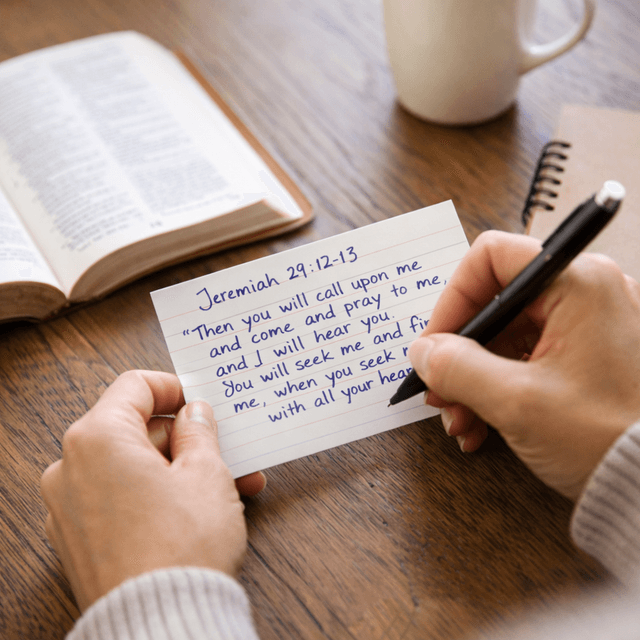
Before you open your Bible, open your heart. The Holy Spirit is not a footnote in the study process; He is the teacher. Jesus promised that the Spirit would guide us into all truth (John 16:13). That means the most important thing you bring to any passage is not a commentary or a concordance, but a posture of humility and dependence.
Ask the Spirit to illuminate the text. Ask Him to guard you from your own assumptions. The person who prays before they read will often see more than the scholar who does not.
Context Is Key
Every passage of scripture lives inside a story. It has a before and an after. It belongs to a chapter, a book, a testament, and an overarching narrative that runs from Genesis to Revelation. Before you settle on what a verse means, ask: What is happening around it? Who is speaking? Who is listening? What has just happened, and what comes next?
Pulling a verse out of context is one of the most common — and most dangerous — habits in Bible reading, teaching, and preaching. This is exactly the strategy the devil used when he tempted Jesus: taking a word from the Lord and twisting its meaning. A sentence lifted from its surroundings can be made to say almost anything. Keep it in its home.
Cultural and Historical Context: Use It, Don’t Live in It
Understanding the world in which a passage was written is genuinely valuable. Knowing the geography, the customs, the political climate, and the daily life of the people in the story helps us enter the narrative and feel its weight. These details draw us in.
But they are the stage, not the story.
Characters carry the theme and purpose of a narrative, not the props. If a teacher spends most of their time on historical background and very little time on spiritual meaning, pay attention. Rich cultural detail with thin spiritual application can leave us well-informed but spiritually empty. The goal of scripture is not to take us back to ancient Israel; it is to bring God’s eternal truth into our lives today.
Watch for Repeated Words, Themes, and Obstacles
God is intentional. When a word, image, or theme appears more than once in a passage — or echoes across multiple books — that repetition is a signal worth following.
When Jesus says “Truly, truly” in John’s Gospel, He is essentially saying, “Stop. This matters. Lean in.”
Consider the accounts in Mark 5:21–43, Matthew 9:18–26, and Luke 8:40–56, where Jesus encounters a religious leader with a dying daughter and a woman suffering for twelve years. Both are more than miracles. Look at how many times faith appears and is tested, attacked, questioned, and rewarded. Look at how healing comes, and what role the recipients play. Miss the spiritual thread, and you have a happy ending. Follow it, and you will have a word that takes root and produces fruit in your own life.
Beware of Verses That Have Nothing to do with the Passage
Every word of God is powerful on its own. When a speaker introduces verses or stories from elsewhere in the Bible that have no real connection to the passage being studied, it is worth slowing down and asking why.
Sometimes it is simple enthusiasm — drawing connections where God’s word genuinely echoes across books. But sometimes it is a sign that the speaker has run out of insight from the actual text and is reaching for something to fill the gap. When unrelated passages are blended together and presented as a unified meaning, the original text loses its voice. You end up with the speaker’s idea dressed in scripture’s clothes.
This is not a reason to distrust every cross-reference. It is a reason to stay anchored in the source passage and ask whether any addition serves the text or replaces it.
Go Back to the Source Language
This sounds more intimidating than it is. You do not need to learn Greek or Hebrew to benefit from this practice; you need a good concordance or a free tool like Blue Letter Bible or Logos.
The New Testament was written in Greek. The Old Testament in Hebrew and Aramaic. When a word or phrase feels unclear, or when it seems out of step with the rest of the passage, look it up in the original language. Discover how that word is used elsewhere in scripture. The same Greek word translated “peace” in one verse might carry the sense of wholeness or completeness that changes everything about how you understand a passage.
Writers chose their words carefully. God inspired every one of them. The source language is where those choices live.
Follow the Breadcrumbs
This is different from checking a word for clarity; this is following a word or image throughout scripture to see what it meant, how it grew, and where it leads.
Take a word like lamb. Follow it from Abel’s offering, through the Passover, through the sacrificial system, through Isaiah 53, into John the Baptist’s declaration at the Jordan, and finally to the throne in Revelation. What you find is not a collection of scattered references; it is a river of meaning, running through the whole of God’s story, that arrives at Christ.
This kind of breadcrumb study is where the Bible stops feeling like a library of separate books and begins to feel like one voice. It is often in these moments that the Holy Spirit speaks something fresh and specific — not just to your mind, but to your spirit.
Evaluate in Community
The Bible was not written to be read in isolation, and it was not meant to be interpreted alone. Throughout history, the most dangerous doctrinal errors have come from individuals who cut themselves off from the correction of others and followed their own reading wherever it led.
When you arrive at an interpretation, bring it to others. Look for people who, though they may not know chapter and verse by memory, know God’s word deeply enough to find the passages that confirm or challenge what you’ve found. Memorization alone is not evidence of belief or spiritual understanding. Satan knows the Bible. He quoted it to Jesus in the wilderness. What you’re looking for is not a concordance in human form, but someone who knows the Spirit behind the word well enough to recognize when an interpretation rings true: or doesn’t.
The body of Christ is one of God’s primary instruments for keeping us honest.
Hold Your Interpretations Humbly
You will not get every passage right. Neither will your pastor. Neither will the most celebrated theologian. This is not a weakness; it is part of how God designed the journey.
Jesus promised to give us greater revelation, to bring to mind all He taught and did, and to reveal mysteries hidden since the foundation of the world. That means our understanding today is meant to deepen tomorrow. There will be moments when something we held as true turns out to be incomplete, or needs to be corrected entirely. If we are genuinely led by the Spirit, those moments should be few. But they will come, and when they do, the humble person grows while the proud person digs in.
Pride is the great enemy of wisdom. Become rooted in the revelation you receive; but stay open to the Spirit’s ability to shift, refine, or redirect you when He needs to. The goal is not to master scripture. The goal is to be mastered by it.
Come to every passage asking not just, “What does this mean?” but, “Lord, what are you saying to me, today, through this?” That posture keeps the word alive and keeps you teachable for whatever He has next.
And when a passage resists you — when the meaning won’t come clear no matter how long you sit with it — take that to Him too. The Holy Spirit is the Spirit of Jesus, and asking for clarity is asking Christ Himself. Like the disciples, there will be times when He withholds greater insight for a season. Accept that. It is not rejection. If the desire to understand is burning in you, it is because He placed it there. He wants you to come to Him, keep asking, and keep seeking: because He wants you to know.
So be comfortable wrestling with a passage. Expect Jesus to wrestle with you. That wrestling is not frustration; it is fellowship. It is part of the deep, pure joy that only comes from time in God’s word, and it is a joy the world cannot manufacture or take away.
Here’s the section, polished and expanded:
Use Commentaries as a Last Resort
There is an old joke buried in the word: commentators are often just common taters: dressed-up potatoes with a French accent. But the humor points to a truth.
Commentaries can be useful, but reach for them last, not first.
Before you seek insight from others, do the harder and more rewarding work of sitting with the Lord on the passage. Pray. Wrestle. Look at the context, the repeated themes, and the source language. Let the Holy Spirit have the first word. Only after you have settled something in your heart — even if that something is simply a confident question — should you consider picking up a commentary to test or deepen what you’ve found.
And even then, perhaps not.
Every word written by man will either affirm the word of God or quietly confuse it. Many commentators approach scripture primarily from a historical and cultural angle; and a commentary that tells you everything about first-century fishing culture but nothing about how the passage speaks the living truths of God’s word is a net without fish. Quick example: Peter, a fisherman, made his living by taking live creatures — fish — and killing them. Jesus called Peter to take spiritually dead men and give them life. That kind of insight comes from sitting with Jesus in the passage. This is what it means to meditate on the word of the Lord.
Jesus was there. Ask Him what He saw, felt, heard, and meant by His words.
If you do reach for a commentary, look for those that dig into the Greek and Hebrew: ones that open up the meaning of specific words in the text rather than simply retelling the story in more sophisticated language. These can be genuinely rich additions to your study.
But here is the caution: if the commentary does the digging for you, the treasure will feel like someone else’s. The impact of a truth you worked and waited and prayed to receive is unlike anything handed to you secondhand. God hides things for us to find. This is for His joy and ours. Hide-and-seek in scripture is part of coming to know His nature.
Better to let Jesus introduce you to His Father than an author who may or may not be on a first-name basis with God.
Excerpt from: https://www.goodreads.com/book/show/53221012-christian-owner-s-manual