Embrace Spiritual Growth: Lesson from a Little Red Rocking Chair — Nicole O'Meara
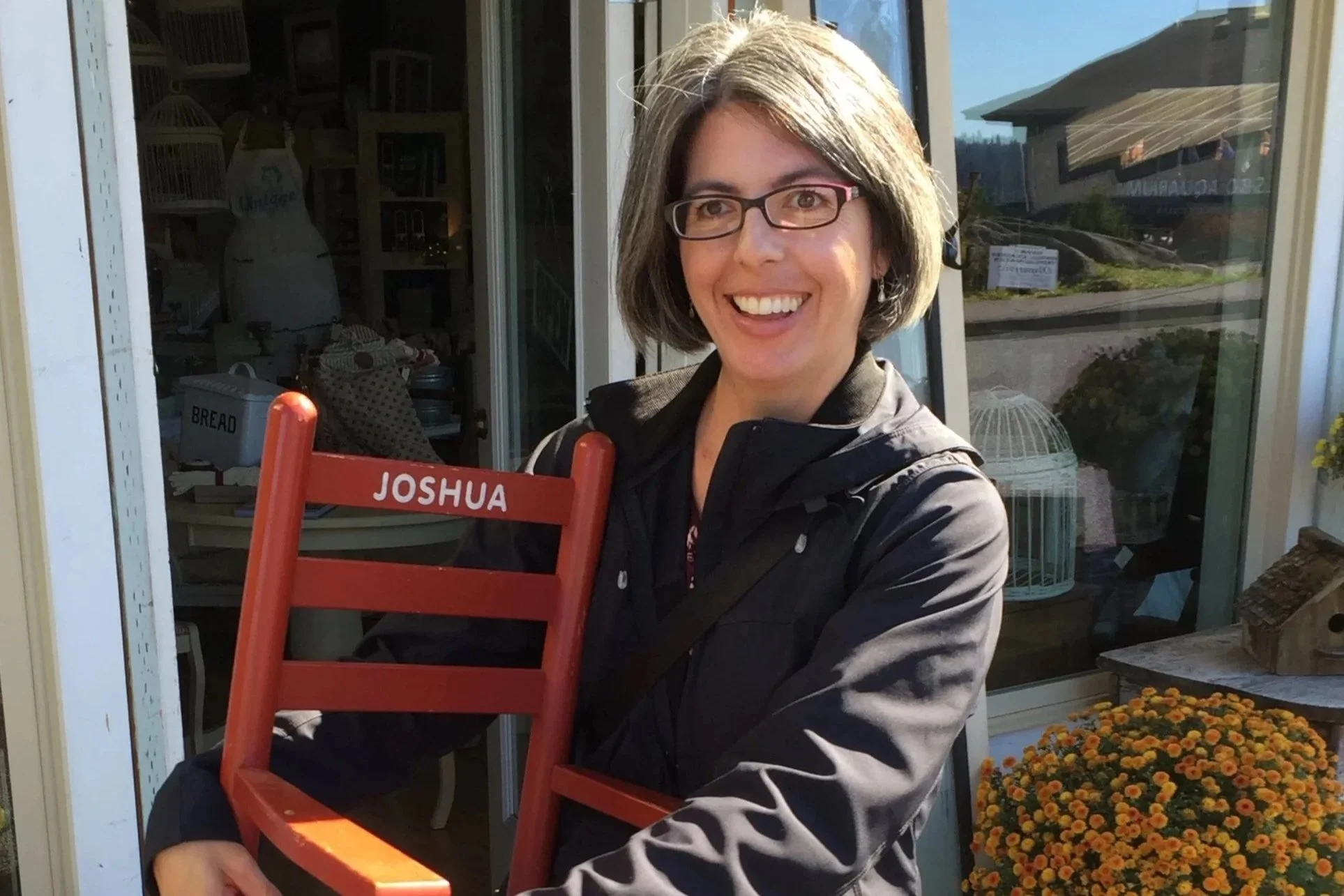
When my son was a baby in that almost-toddling stage, I took him to visit my Swedish Godmother. He crawled around her 100-year-old home until he found a little red chair that was the perfect size for a walker. From then on, he pushed it around her home, sliding it along her hardwood floors, baby-walking behind it.
But he couldn’t get it over the threshold between the living room and the kitchen. So, he’d pause and use a Baby Sign for “please.” This delighted my godmother no end. “I’ll help you, Baby Joshie,” she’d call as she hurried over to lift the little red chair over the threshold. Then he was off and walking again.
Five years later, I found a little red rocking chair in a cute store in Poulsbo, WA. It wasn’t the same red chair, but it embodied the story and the love of my Swedish Godmother, so I took it home. There was a perfect spot for it at the top of the stairs. Nobody in the house fit in it, but that didn’t matter. It made me smile just to see it.
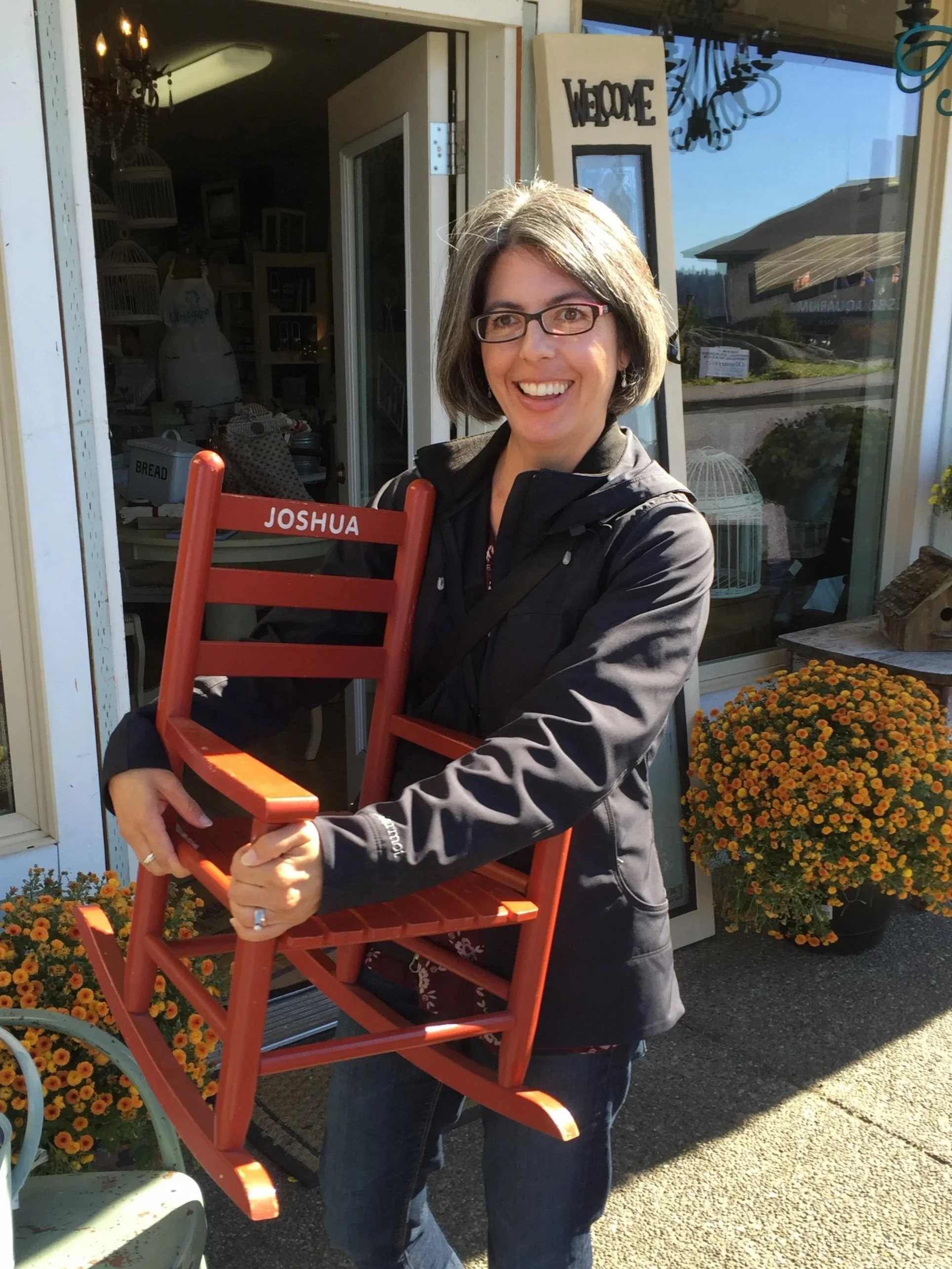
Then we moved to a smaller home with no obvious spot to put it. So, my little red rocking chair has spent the last two years in the attic. Last month, we got it out.
We’ve been watching a precious toddler, not our own but one who endearingly calls us Grandma and Grandpa, and she’s at the perfect stage for a little rocking chair. But getting in and out of it has been a challenge. We’ve helped her through the steps of getting in and out of it a half-dozen times. There’s a small level of executive function and a large amount of balance necessary for the task.
This weekend, she did it. She backed her little booty into the chair and sat down, all by herself. I was so proud!
Why? Why do small developmental victories bring parents (and surrogate grandparents) so much joy? It is natural to delight in watching things we love grow healthy and strong. It is the normal path of life—to learn, grow, develop, and mature.
As someone who has lived through a lot of not-normal (abnormal?), I allow myself to revel when things go right.
Paul warns us not to stay immature, but to grow into mature believers who can understand truth and walk in righteousness (Hebrews 5:11-14). Let’s be honest here. It is only by God’s grace that any of us grow into mature adults, and hopefully, mature children of God. The mystery is that this growth is a partnership between God and us. Together, we learn and grow.
Personally, that partnership takes a small death—death to pride. I’ve got to decide that I’d rather do it God’s way than my own way.
Like our precious toddler, we need to be taught how to take the next step on our path to spiritual maturity. But stepping on our own requires both listening and obeying. It’s funny, sort of, when our precious girl spits out "no" and attempts to sit in the rocking chair forwards, which puts her knees in the way so that she can’t turn and sit. It’s much less funny when we get ourselves stuck in uncomfortable circumstances merely because we want to do things our own way.
I’m looking at our little red rocking chair right now. I’ve decided it will be my visual reminder to deny my pride, and to ask my Heavenly Father, “please” when I need help, and to obey his instructions given in his written Word. I never want to stop growing.
I made you a list of 12 Verses to Help You Endure.
I’d love to send it to you.
You May Also Like . . .
Paul warns us not to stay immature, but to grow into mature believers who can understand truth and walk in righteousness (Hebrews 5:11-14). Let’s be honest here. It is only by God’s grace that any of us grow into mature adults, and hopefully, mature children of God. The mystery is that this growth is a partnership between God and us. Together, we learn and grow.

Grace is like manna, we need it to survive, but we only get what we need when we need it. But, don’t lose sight of this, God will give us his grace when we need it. Count on it!
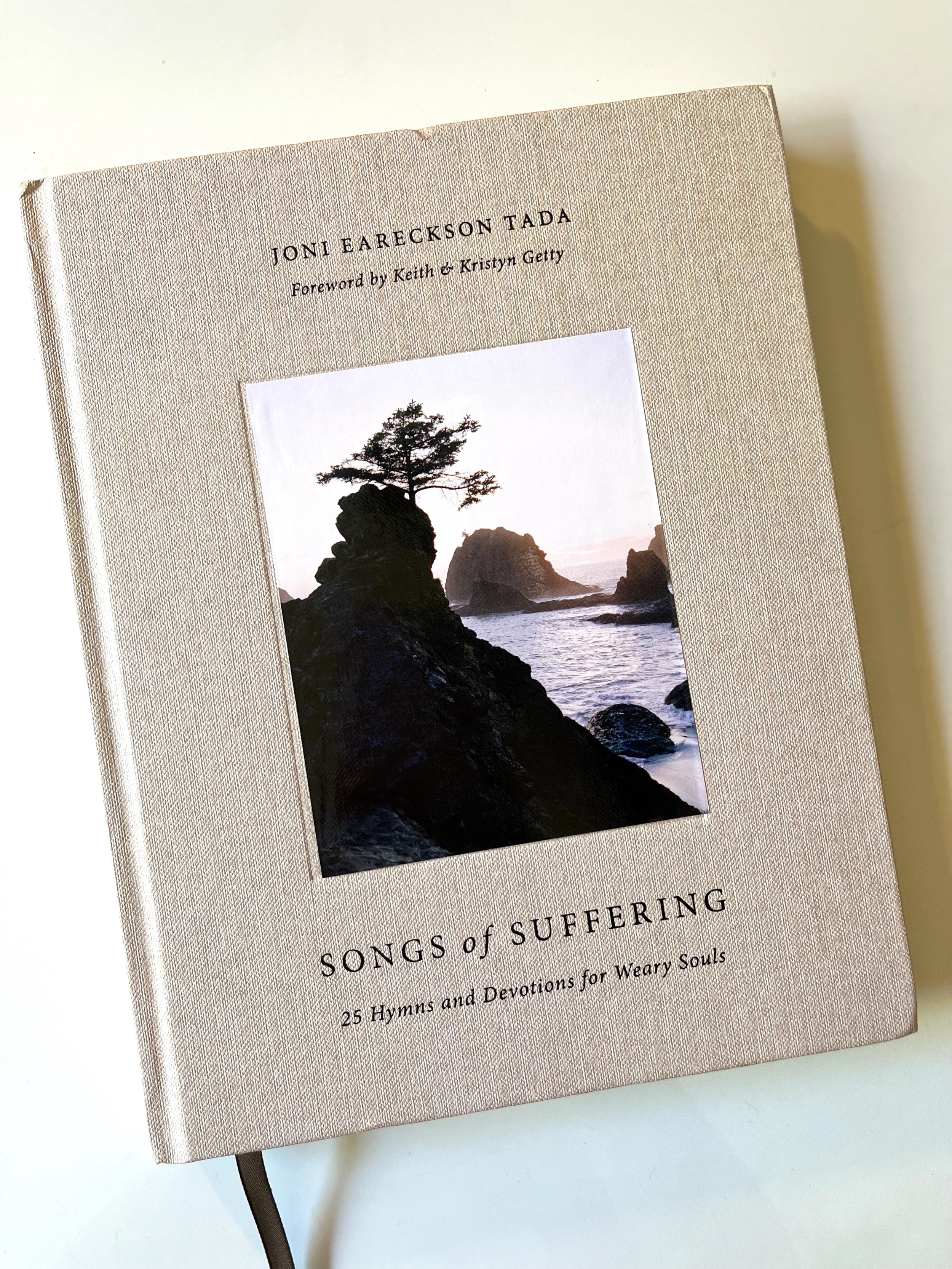
The first devotional made me cry, not out of sadness, but from a sense of connection I have never before felt to Joni. Joni knew what it was like for me because she had felt it too.
That feeling of being known and understood returned several times as I read through Songs of Suffering. Our situations are remarkably different, but Joni shares many of the same feelings I have experienced. Perhaps you too.

Corrie Ten Boom leaned on God’s promise as she lived through harsh winters in lice-infested barracks and as she grieved the loss of her family. I like to imagine Corrie reading promises of strength out of her only possession: a hidden Bible she wore on her back. Scripture was her solace, God’s Word her strength.

Congenital blindness is untreatable (v.32). In the opening verses of John 9, the disciples don’t question if the man born blind can be healed by Jesus because they assume a congenital defect is beyond a miracle. Instead, they use the man’s predicament as an opportunity for Jesus to clarify a debated question. “Who sinned to cause this blindness,” they ask, “the man or his parents?”
We have an innate desire to connect cause with effect. But from Jesus’ reply we learn that causation is not as important as purpose. Jesus answers that neither the parents nor the man sinned—the blindness existed so that the wondrous signs of God could be displayed.

We need the kind of rest that renews and restores. Rest when our feet ache at the end of a long day, and rest when our heart breaks for a dear friend. Rest when we need grace for ourselves, and rest when someone needs grace from us. We need rest that heals. This is the rest Jesus offers when He said, “Come to me, all who labor and are heavy laden, and I will give you rest” (Matthew 11:28).