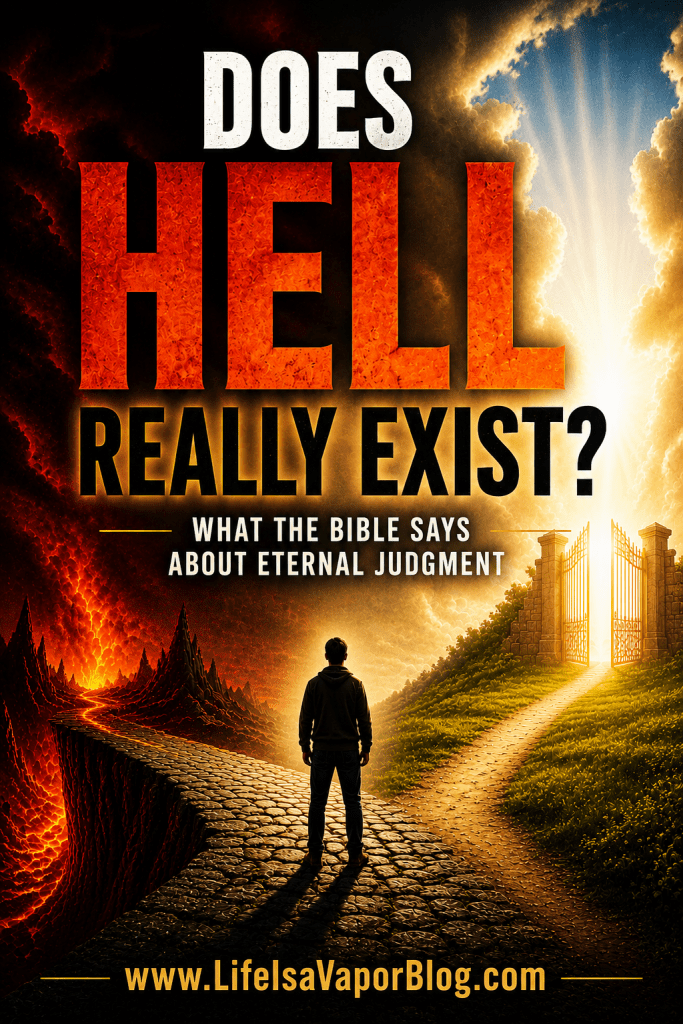
Does Hell Really Exist? What the Bible Clearly Says About Eternal Judgment
Introduction: The Question Many Are Afraid to Ask
Does Hell really exist?
It’s a question many people think—but few are willing to ask out loud. In a world that prefers comfort over truth, Hell is often dismissed, redefined, or completely ignored. Some call it outdated. Others say it’s symbolic. Many simply hope it isn’t real.
But what if it is?
What if Hell is not a scare tactic, but a sobering reality?
If the Bible is truly God’s Word, then we cannot afford to shape truth around our feelings. We must let God define reality—even when it makes us uncomfortable. And when we come to Scripture with humility, we discover that Hell is not a fringe idea—it is a central and consistent warning.
This isn’t meant to alarm for the sake of fear.
It’s meant to awaken for the sake of truth.
Related: Is God Angry With Sinners?
What Does the Bible Say About Hell?
The Bible does not whisper about Hell—it speaks about it plainly, repeatedly, and seriously.
Jesus Himself spoke about Hell more than anyone else in Scripture. That alone should cause us to pause. If Hell were not real, why would the most loving person who ever lived warn about it so often?
“And these will go away into eternal punishment, but the righteous into eternal life.” — Matthew 25:46
This verse is crucial. Jesus places eternal punishment and eternal life side by side. If one is real and everlasting, so is the other. You cannot consistently believe in Heaven without also acknowledging Hell.
Jesus also gives vivid warnings:
“It is better for you to enter the kingdom of God with one eye than with two eyes to be thrown into hell, ‘where their worm does not die and the fire is not quenched.’” — Mark 9:47–48
This language is intense—and intentionally so. Hell is described as:
- A place of unquenchable fire
- A place of ongoing decay and torment
- A place of conscious suffering
- A place of eternal consequence
Related: What Is the Gospel? A Clear and Biblical Explanation of the Good News
A Unified Message Across Scripture
Hell is not isolated to one part of the Bible. It appears across both Old and New Testaments:
- Isaiah 66:24 — describes undying worms and unquenchable fire
- Daniel 12:2 — everlasting shame and contempt
- 2 Thessalonians 1:9 — eternal destruction away from the Lord
- Revelation 20:10–15 — the lake of fire and final judgment
This consistency matters. The Bible speaks with one voice:
Hell is real. Hell is serious. Hell is eternal.
Why Would a Loving God Create Hell?
This is often the emotional core of the issue.
People don’t usually struggle with Hell because of lack of evidence—they struggle because of what it implies about God.
“How could a loving God allow this?”
But this question assumes something incomplete about God. It emphasizes His love while overlooking His holiness and justice.
“Holy, holy, holy is the Lord of hosts.” — Isaiah 6:3
“Worship the LORD in the splendor of holiness;
tremble before him, all the earth!” — Psalm 96:9
God is not only loving—He is perfectly holy. His holiness means He is completely pure, completely righteous, and completely set apart from sin.
Related: How Can I know I’m Truly Saved? 6 Biblical Signs of Genuine Salvation
The Seriousness of Sin
We tend to measure sin against other people.
God measures sin against Himself.
Sin is not just wrongdoing—it is rebellion against the Creator.
R.C. Sproul put it this way:
“Sin is cosmic treason against a perfectly holy God.”
That changes everything.
When sin is seen for what it truly is, Hell begins to make sense—not as cruelty, but as justice.

Justice Is Not the Opposite of Love
A world without justice would not be loving—it would be terrifying.
If evil goes unpunished, then God is not good.
John MacArthur explains:
“The punishment of Hell is not unjust—it is the just response of a holy God to unrepentant sin.”
Hell exists because God is good—not in spite of it.
Related: Can I Lose My Salvation?
Is Hell Literal or Symbolic?
Some argue that Hell is simply symbolic—a metaphor meant to communicate spiritual separation, not real suffering.
But this argument falls short for a few reasons.
First, even symbolic language points to a real reality. When the Bible uses imagery like fire, darkness, and torment, it is not minimizing the truth—it is intensifying it.
“In that place there will be weeping and gnashing of teeth.” — Matthew 13:50
This phrase communicates anguish, regret, and conscious suffering.
Second, if Hell were only symbolic, it would be strange for Jesus to warn about it so urgently and frequently. His warnings carry weight because the danger is real.
More Than Just Separation
Yes, Hell includes separation from God—but it is not only separation.
“They will suffer the punishment of eternal destruction, away from the presence of the Lord.” — 2 Thessalonians 1:9
Hell is both:
- Separation from God’s goodness
- Exposure to His righteous judgment
Even if every image is not literal, the reality is no less terrifying.
Related: Why Do I Need to be Saved?
How Long Does Hell Last? Is It Eternal?
One of the most difficult aspects of Hell is its duration.
Is it truly eternal?
The Bible’s answer is consistent: yes.
“The smoke of their torment goes up forever and ever, and they have no rest, day or night.” — Revelation 14:11
This is not temporary language. It is continuous, unending, and final.
Parallel With Eternal Life
Jesus uses the same word to describe both destinies:
“These will go away into eternal punishment, but the righteous into eternal life.” — Matthew 25:46
If we shorten Hell, we must also shorten Heaven. The two stand or fall together.
Related: What Does it Mean to be Born Again?
No Opportunity After Death
Scripture gives no indication of second chances beyond this life.
“It is appointed for man to die once, and after that comes judgment.” — Hebrews 9:27
That makes this life incredibly important.
What you believe about Christ now has eternal consequences.
Who Goes to Hell According to the Bible?
This question often reveals a misunderstanding.
Many assume Hell is reserved for the worst of the worst.
But Scripture teaches something far more sobering.
“All have sinned and fall short of the glory of God.” — Romans 3:23
The standard is not “better than others.”
The standard is God’s perfection.
Related: What Will Heaven Be Like?
The Real Divide
The Bible does not divide humanity into “good people” and “bad people.”
It divides humanity into:
- Those who are in Christ
- Those who are not
“Whoever believes in the Son has eternal life… whoever does not obey the Son shall not see life, but the wrath of God remains on him.” — John 3:36
Hell is not about being worse than someone else.
It is about remaining in sin without a Savior.
What Did Jesus Teach About Hell?
If anyone would soften the reality of Hell, it would be Jesus.
But He didn’t.
He spoke of:
- Outer darkness (Matthew 8:12)
- Weeping and gnashing of teeth (Matthew 13:42)
- Unquenchable fire (Mark 9:43)
- Eternal punishment (Matthew 25:46)
These are not casual references. They are warnings.
Why Jesus Spoke About Hell So Much
Because He came to save people from it.
John Piper writes:
“Jesus spoke about Hell more than anyone because He was on a mission to rescue people from it.”
Every warning about Hell is an invitation to escape it.
Can Hell Be Avoided? The Hope of the Gospel
Here is where the message turns from sobering to hopeful.
Hell is real—but it is not unavoidable.
God has made a way.
“For God so loved the world, that he gave his only Son…” — John 3:16
Jesus did not come merely to teach.
He came to take the punishment sinners deserve.
On the cross, He bore the wrath of God in place of those who would believe.
Related: What on Earth is God Doing?
The Great Exchange
- Our sin placed on Christ
- His righteousness given to us
“There is therefore now no condemnation for those who are in Christ Jesus.” — Romans 8:1
Charles Spurgeon said:
“You are not saved by your works—you are saved for your works.”
Salvation is a gift—but it must be received.
Why This Truth Matters More Than Ever
We live in a time when truth is often reshaped to fit preferences.
Hell is one of the first doctrines people try to soften.
But ignoring Hell does not remove it.
If Hell is real, then:
- Eternity is at stake
- The Gospel is urgent
- Our lives have eternal weight
This truth should not make us arrogant—it should make us compassionate.
Conclusion: A Sobering Truth and a Glorious Hope
So, does Hell really exist?
The Bible’s answer is clear: yes.
But that is not the end of the story.
God has made a way through Jesus Christ—a way of forgiveness, restoration, and eternal life.
Hell is real.
But so is grace.
And today, grace is still being offered.
FAQ: Does Hell Really Exist? (Additional Questions People Ask)
1. What is Hell actually like according to the Bible?
The Bible describes Hell using vivid imagery to communicate its severity—fire, darkness, isolation, and anguish. It is a place of conscious suffering and separation from God’s goodness.
“…where their worm does not die and the fire is not quenched.” — Mark 9:48
While some descriptions may be symbolic, they point to a very real and terrifying reality that should not be taken lightly.
2. Did God originally create Hell for humans?
Scripture indicates that Hell was not originally created for humanity, but for Satan and his angels.
“Depart from me, you cursed, into the eternal fire prepared for the devil and his angels.” — Matthew 25:41
However, those who reject Christ follow the same path of rebellion and therefore share in that judgment.
3. Are there different levels of punishment in Hell?
The Bible suggests varying degrees of judgment based on knowledge and rejection of truth.
“That servant who knew his master’s will but did not get ready… will receive a severe beating.” — Luke 12:47
This indicates that God’s judgment is perfectly just—measured, fair, and according to each person’s accountability.
4. What happens immediately after someone dies without Christ?
Scripture teaches that after death comes conscious awareness and judgment.
“It is appointed for man to die once, and after that comes judgment.” — Hebrews 9:27
Jesus’ account of the rich man and Lazarus (Luke 16:19–31) shows immediate awareness after death, reinforcing the seriousness of one’s eternal state.
5. Why doesn’t God just destroy sinners instead of punishing them eternally?
Some believe in annihilation (ceasing to exist), but Scripture consistently describes ongoing, conscious punishment.
“…they have no rest, day or night…” — Revelation 14:11
Eternal punishment reflects both the seriousness of sin against an eternal God and the justice of His righteous judgment.
6. Does God take pleasure in sending people to Hell?
No—God does not delight in judgment. His heart is for repentance and salvation.
“I have no pleasure in the death of the wicked… turn back, and live.” — Ezekiel 18:32
Hell is not God’s desire—it is the result of rejecting His grace.
7. Can good works keep someone out of Hell?
No. The Bible makes it clear that salvation is not based on human effort.
“…he saved us, not because of works done by us in righteousness, but according to his own mercy…” — Titus 3:5
Good works cannot erase sin. Only Christ can.
8. What should my response be if Hell is real?
The right response is not despair—but repentance and faith.
“Repent therefore, and turn back, that your sins may be blotted out.” — Acts 3:19
The reality of Hell is meant to lead us to Christ, not away from Him.
If this article was helpful, please share it!