
Communion in the Bible: What Scripture Says
On the night before he died, Jesus did something his followers have repeated ever since. He took bread and a cup, gave thanks, and told his friends to keep doing this in remembrance of him. From that quiet table came the practice Christians call communion, and the communion scripture behind it is worth understanding.
Whether you call it communion, the Lord's Supper, or the Eucharist, the meaning is anchored in Scripture. As with our explanations of key passages, the details give it depth.
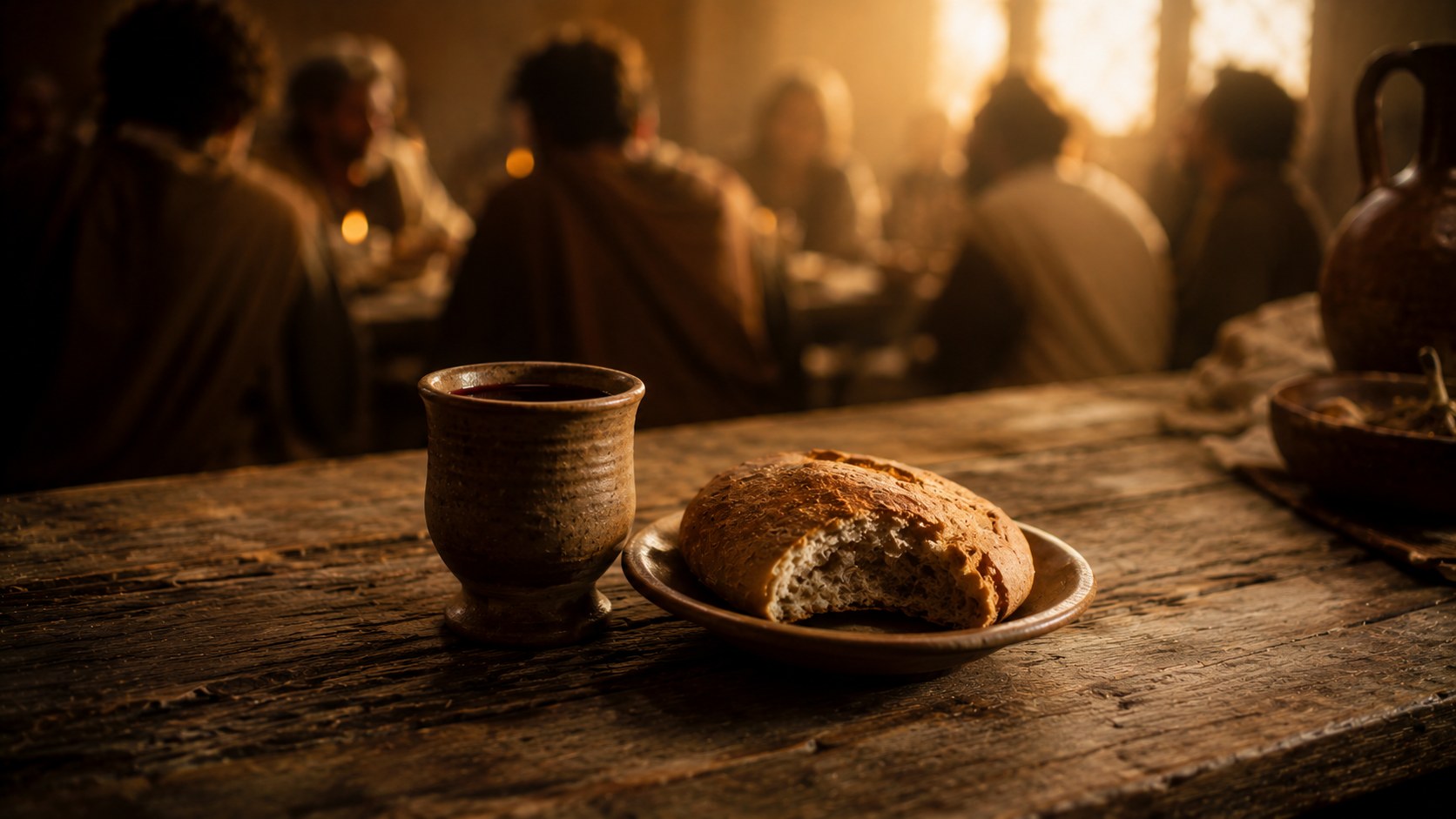
Where communion comes from
The core passages are the accounts of the Last Supper and Paul's instructions. Jesus "took bread, gave thanks and broke it... 'This is my body given for you; do this in remembrance of me.' In the same way, after the supper he took the cup" (Luke 22:19-20). Paul repeats this and adds that "whenever you eat this bread and drink this cup, you proclaim the Lord's death until he comes" (1 Corinthians 11:26).
What the bread and cup mean
The bread points to Jesus' body, given on the cross; the cup points to his blood, poured out for the forgiveness of sins. Together they are a vivid, tangible reminder of the heart of the gospel — that Christ gave himself for us. Communion looks in several directions at once: back to the cross in remembrance, upward in thanksgiving, inward in self-examination, outward in unity with other believers, and forward to the day Christ returns.
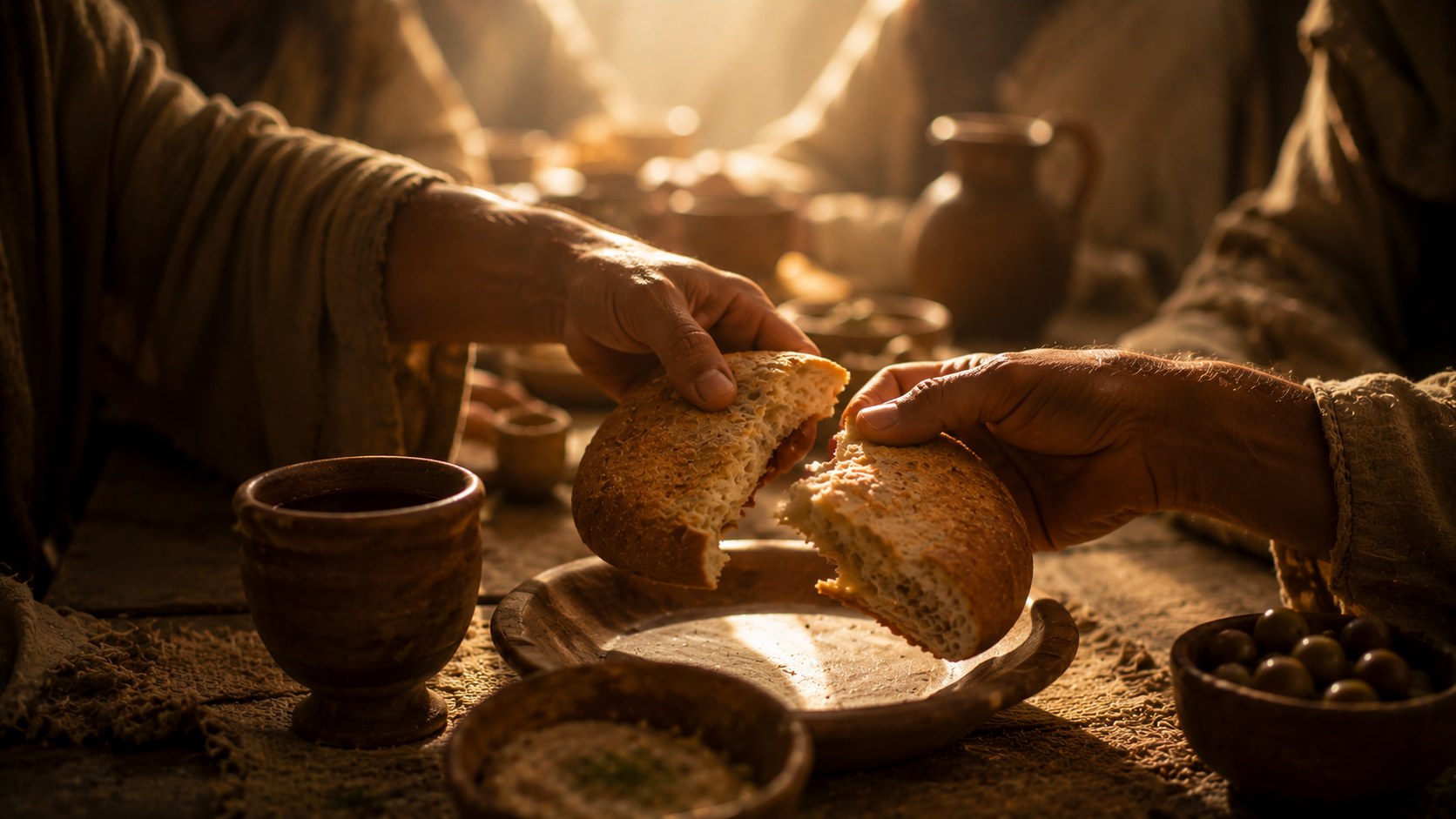
Taking communion worthily
Paul urges that we examine ourselves before taking the bread and cup (1 Corinthians 11:28). This isn't about being good enough — no one is — but about coming honestly: aware of our need, repentant, and reconciled with others where we can be. Communion is not a reward for the worthy; it's nourishment for those who know they need grace. Christians differ on exactly how Christ is present in the elements, but agree the table is a sacred gift meant to be approached with reverence and gratitude.
Frequently asked questions
What is communion in the Bible?
Communion, or the Lord's Supper, is the practice Jesus began at the Last Supper — sharing bread and a cup in remembrance of his body and blood given for us (Luke 22:19-20; 1 Corinthians 11).
What do the bread and cup represent?
The bread represents Jesus' body given on the cross; the cup represents his blood poured out for the forgiveness of sins. Together they proclaim his death until he returns.
What does it mean to take communion worthily?
Paul urges self-examination (1 Corinthians 11:28) — coming honestly and repentantly, aware of our need for grace. It's not about being good enough, but about approaching with sincerity and reverence.
How often should communion be taken?
The Bible doesn't fix a frequency; Jesus said "as often as you do this." Churches vary from weekly to occasional, guided by the call to do it in remembrance of him.
Written by Hannaniah, an ordained minister and seminary professor based in California. For more, see 1 Corinthians 11 on Bible Gateway or Bible Hub.