All by itself, the kingdom grows (Mark 4:26-29)
This little parable tells us how God’s kingdom comes. It receives less attention, as it’s found in only one of the Gospels.
Mark 4:26-29 (NIV)
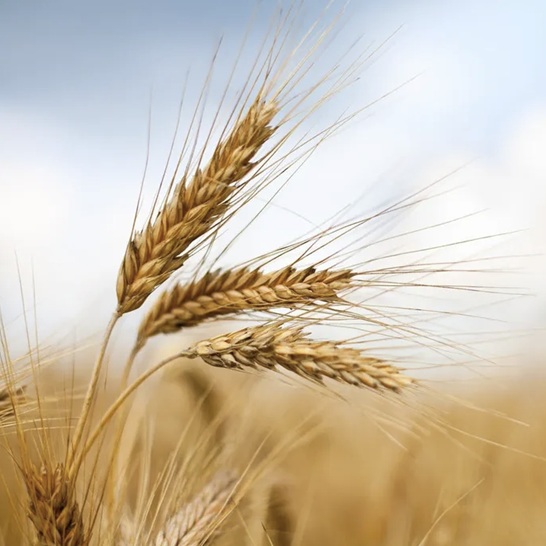
26 He also said, “This is what the kingdom of God is like. A man scatters seed on the ground. 27 Night and day, whether he sleeps or gets up, the seed sprouts and grows, though he does not know how. 28 All by itself the soil produces grain—first the stalk, then the head, then the full kernel in the head. 29 As soon as the grain is ripe, he puts the sickle to it, because the harvest has come.”
Commentators focus on the point that it is God who grows his kingdom. Human effort can’t make it happen. That’s true, but there’s more to Jesus’ story. There’s something different about God’s kingdom compared to every other kingdom in history.
The kingdoms of this world do not grow organically. It takes enormous resources, effort, and strategic planning to build a kingdom. Jesus’ audience knew this well from their experience as a nation.
The word kingdom first appears in Genesis 10:10-12. In the prequel to the Abrahamic nation, the chapter explains why there are gentile nations. Babylon and Assyria — the kingdoms that eventually overpowered Judah and Israel — are named here. A warrior named Nimrod realized the power of death (authorized in 9:1-6) could be used to “hunt” humans. So it’s warriors who build kingdoms like Assyria and Babylon: through war!
This was Israel’s experience. They lost the land when Assyria invaded Israel (722 BC) and Babylon took Judah (586 BC). Then Persia defeated Babylon (539 BC), so they were part of the Persian Empire. Alexander the Great captured everything from Greece to Persia (336–323 BC), so they were ruled by his kingdom. Then Julius Caesar’s armies conquered Palestine (63 BC), extending the Roman Republic all the way to Gaul in the west (58–50 BC) before proclaiming himself Emperor.
That’s how kingdoms grow. That’s how David extended his power over his enemies (1–2 Samuel). Yet, this son of David tells a different story.
In Jesus’ parables, the kingdom grows organically. In the beginning, the heavenly sovereign decreed fruitfulness for the earth: And God said, “Let the earth sprout vegetation, plants yielding seed, … And it was so. The earth brought forth vegetation, plants yielding seed … And God saw that it was good (Genesis 1:11-12). God called humans into partnership with himself to exercise his dominion on the earth, and that partnership is specifically proclaimed in the context of God decreeing that the earth will be fruitful for us (Genesis 1:26-29).
Messiah Jesus therefore takes a different approach to re-establishing the kingdom of God on earth. Unlike how Caesar built an Empire to cover the known world, unlike Alexander or Cyrus the Great, unlike Nebuchadnezzar of Babylon or Shalmaneser of Assyria, Jesus had no plans to establish the kingdom of God by tearing down what was already there (compare Psalm 80:8-13).
Jesus constantly refers to himself as the son of man. He’s the heir of humanity who inherits what God gave the human in the beginning. In the face of beasts who establish their kingdoms by tearing each other apart, the one who is like a human receives the kingdom by the authority of the Ancient of Days (Daniel 7).
Jesus is the human who, in partnership with God, sows the seed of God’s kingship, believing it will grow into what God decreed in the beginning. Instead of planning military strategies to impose his reign on the earth, Jesus trusts that by God’s edict the kingdom will grow even while he sleeps, even if he doesn’t understand the process God has set in motion.
Earthly kingdoms are built with a “sickle” that cuts down their opponents to gain power. But the sickle at the end of Jesus’ story (verse 29) is the joyful harvest, all that was hoped for when the seed was sown, earth as the fruitful kingdom God always anticipated.
Under Jesus’ leadership, we are also servants of the heavenly sovereign, humans in partnership with God, the beneficiaries of what God has intended from the start. We scatter the fruitful seed, relying on God to make it grow into the harvest that comes to life in the resurrected king rather than through war.
What do you think? Was Jesus drawing a contrast between how we build our kingdoms and how God builds his?
Related posts
- Who was the sower? (Matthew 13:1-23)
- Parables of the king (Matthew 13)
This post will be part of the notes and podcasts in the series on Mark 1–8. (See Week 4).

Seeking to understand Jesus in the terms he chose to describe himself: son of man (his identity), and kingdom of God (his mission). Riverview Church, Perth, Western Australia View all posts by Allen Browne